Baseball Game in Seoul: I Don't Follow Baseball. I Go for the Food and the Noise.

Last spring I took a friend visiting from Japan to a baseball game in Seoul. My friend knew the sport. I did not. I still don't. I could not tell you who was winning at any point that evening.
What I remember is dropping a whole bag of Homerun Ball on the floor because I was waving my arms too hard at something everyone else was waving their arms at.
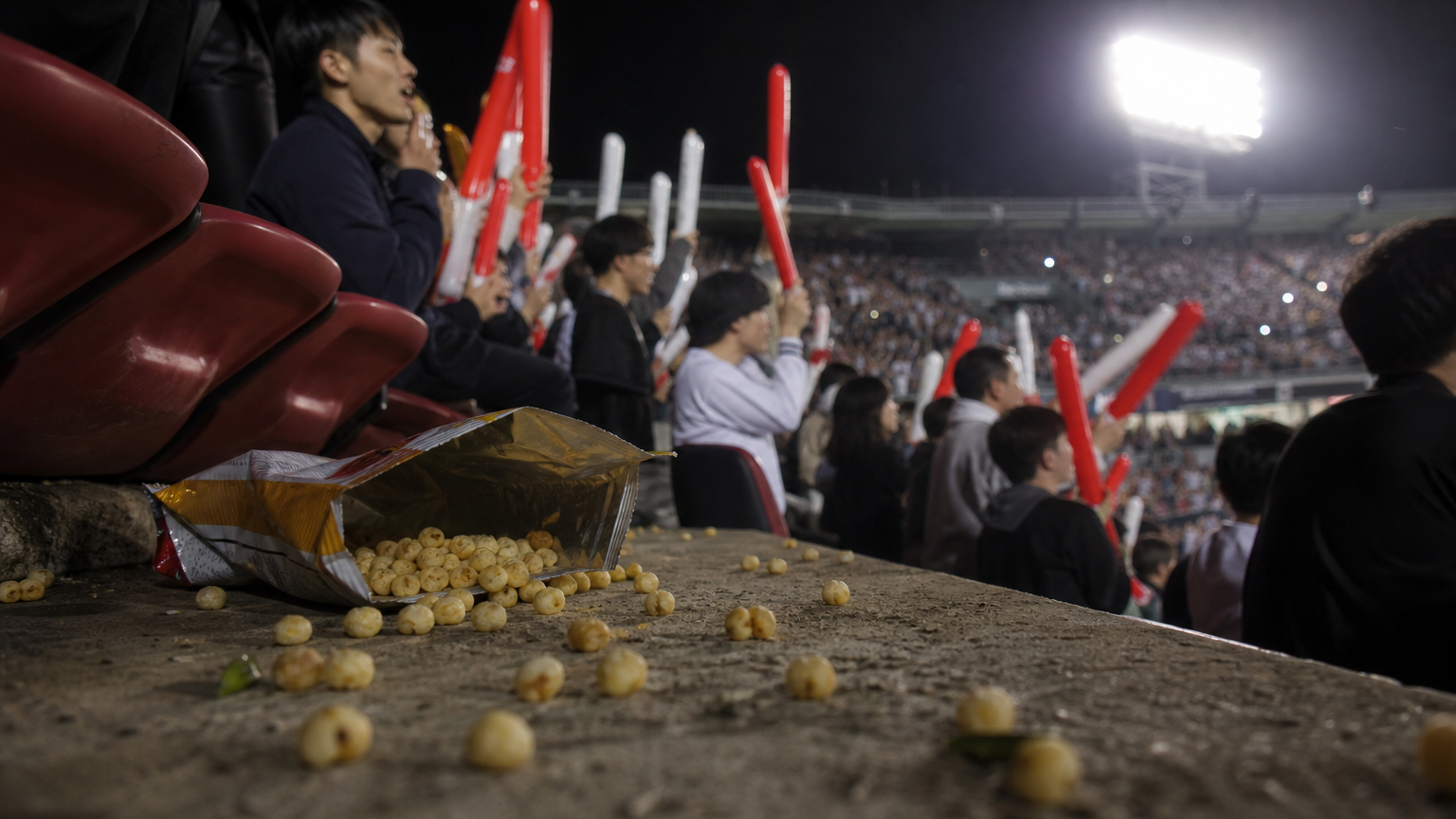
That is not a story about failing to enjoy baseball. That is the normal way to use a Korean baseball stadium, and it took me a while to understand that this is the part worth telling foreign friends about.
Nobody around us was watching the game either
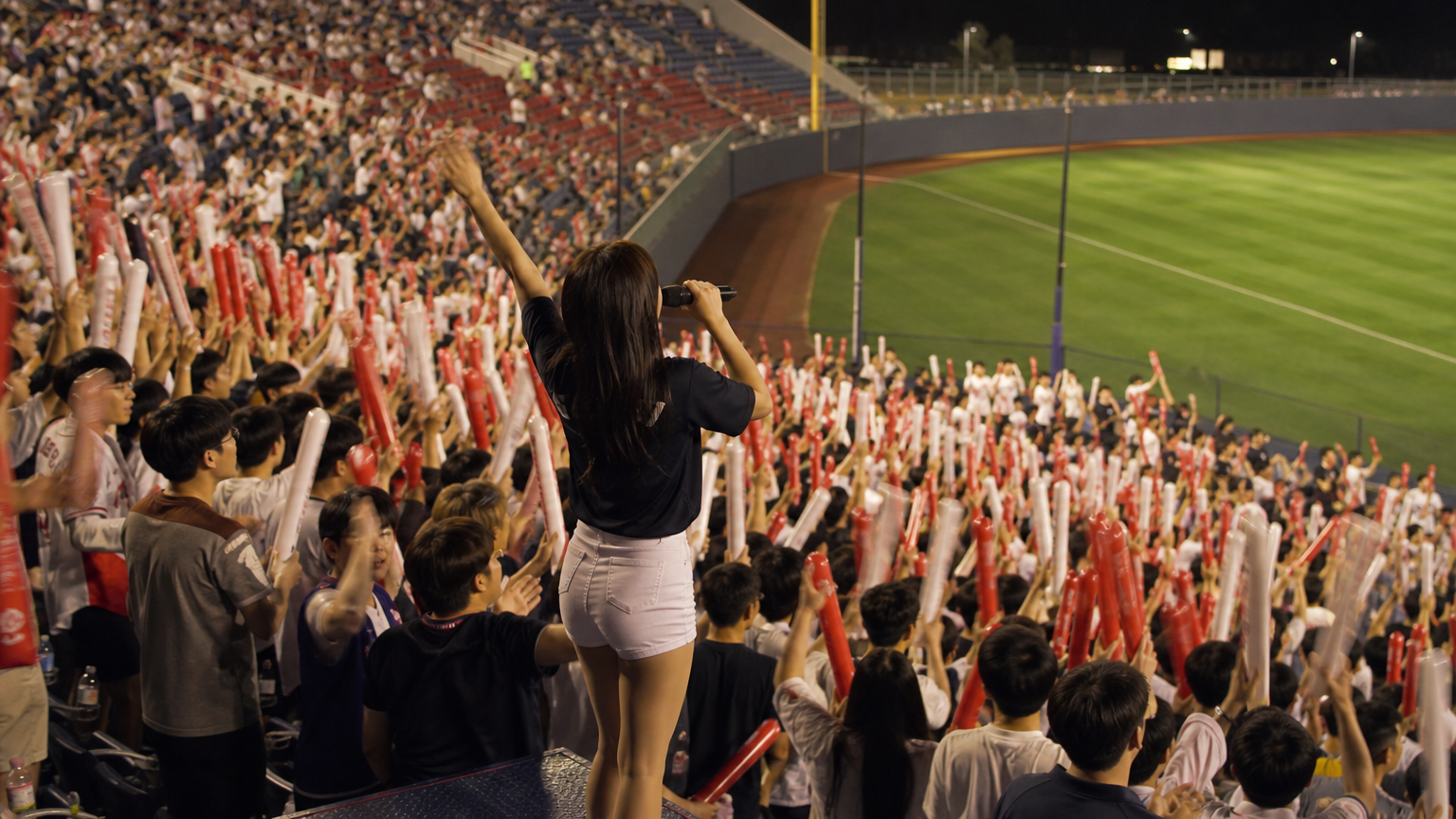
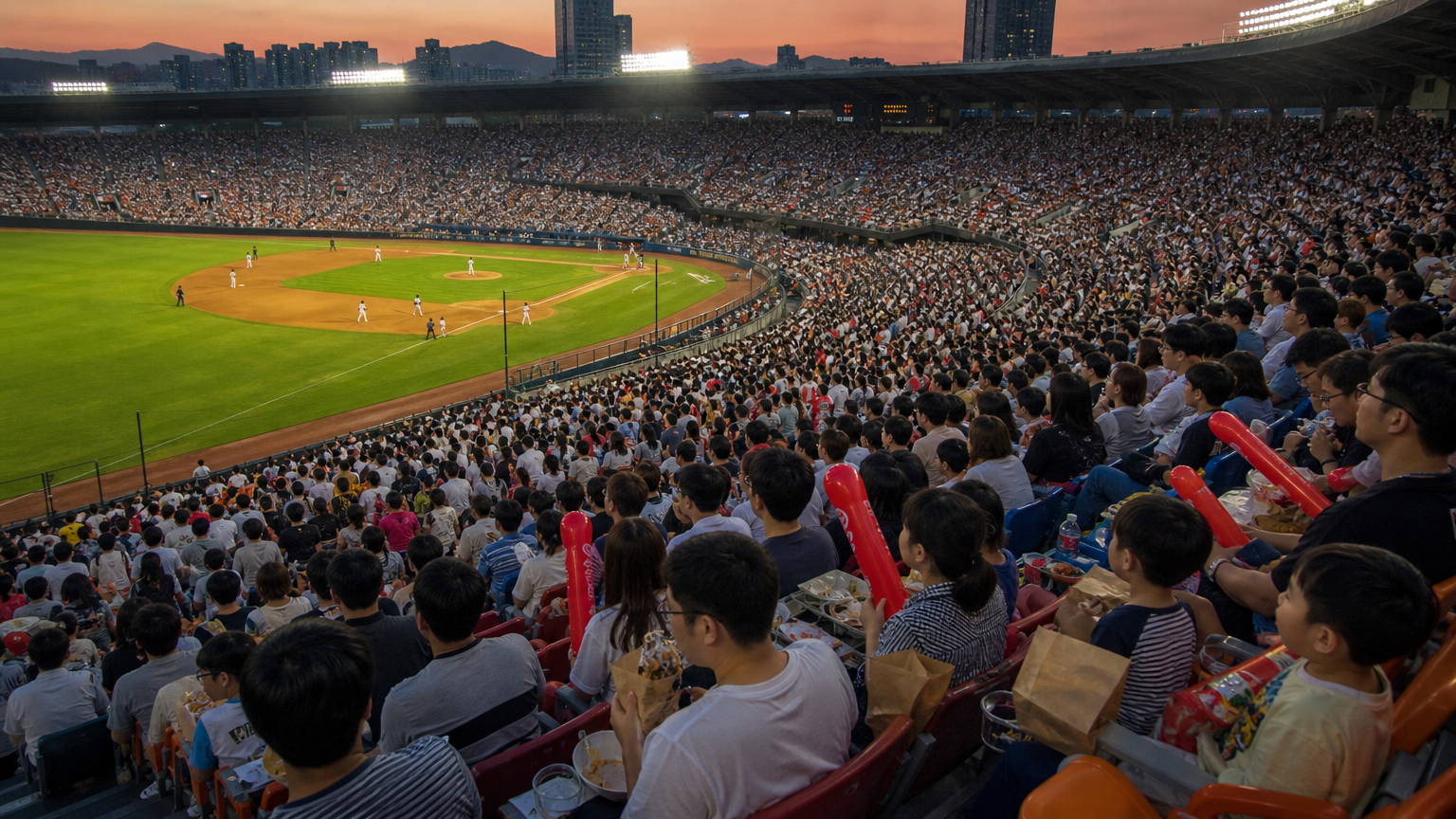
The first thing that surprises people is how little of the crowd's attention is on the field. There is a cheer leader on a platform with a microphone, facing the seats rather than the game. Each player has their own song. When your team is batting, your whole section stands up and sings it. When the other team is batting, you sit down and eat.
So the rhythm of a Korean baseball game is not innings. It is: stand, shout, sit, eat, repeat.
That means the two things you actually need are the ability to copy what the person next to you is doing, and food. Rules are optional.
My friend did not deliver a thoughtful cultural observation at the end of the night. They just had a good time. The ticket was free, we ate a lot, and we shouted at things we didn't understand. I have thought about that a few times since, because I think it is closer to what a good evening actually is than anything I could have planned.
What we brought in, and what the rules actually say
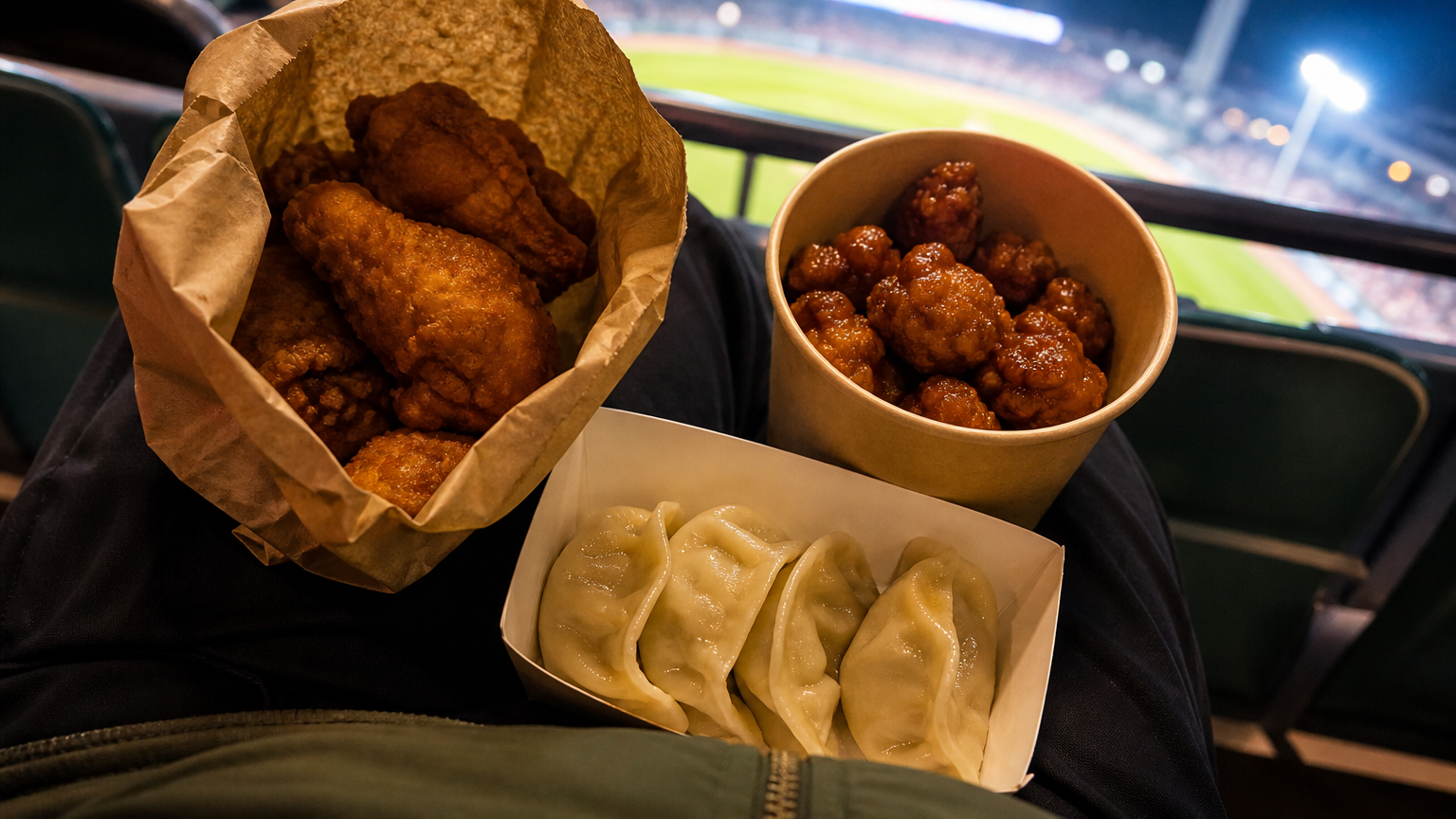
We brought fried chicken from Mom's Touch, in the paper bag, straight from the shop. We also had dakgangjeong, dumplings, and the Homerun Ball that ended up on the floor.
You are allowed to do this. A Korean baseball game is, in practice, a picnic with a scoreboard attached. Stadiums here let you carry in outside food, which surprises people who are used to stadiums where a sealed water bottle gets confiscated. But it is not unlimited, and the limits are written down.
The KBO's official rules set it out by container and by bag size rather than by dish:
| What | Rule |
|---|---|
| Outside food | Allowed, as long as it fits your bag allowance |
| Hot soup, strong-smelling food | May be turned away |
| Bags | One bag per person, 45 × 45 × 20 cm |
| Shopping bags | One per person, 30 × 50 × 12 cm including handles |
| Sealed drinks | One PET bottle and two cans per person |
| Glass bottles, PET over 1L, frozen water | Not allowed |
| Coolers, mats, folding chairs, low tables | Not allowed |
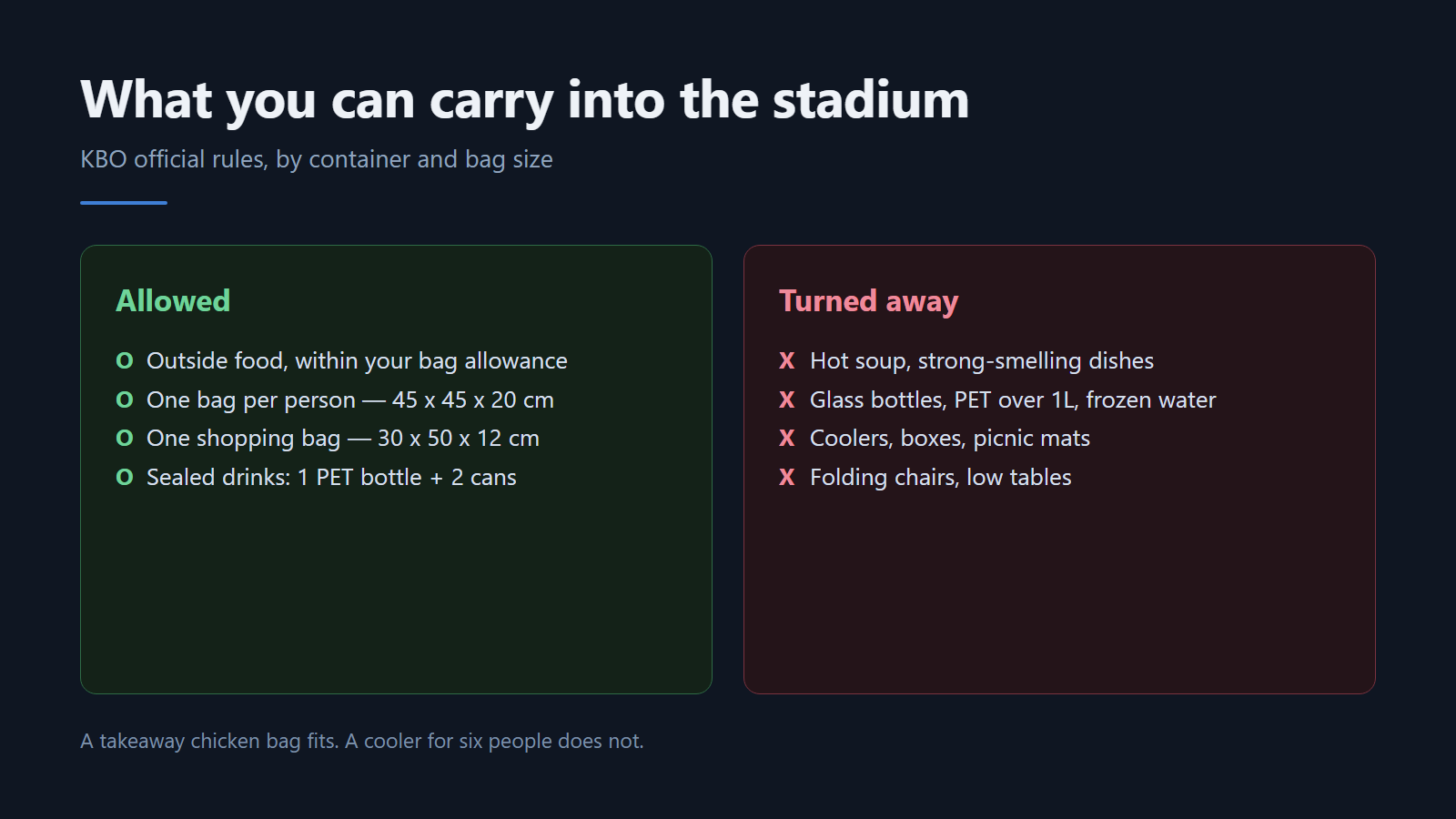
Read the bag line again, because it is the one that decides what you can realistically carry. A takeaway chicken bag fits. A cooler for a group of six does not.
The beer has to be in a cup, and that is a rule, not a preference
I told a friend once that stadium beer only tastes right in the stadium cup. I meant it as a feeling. It turns out it is just the rule.
You buy alcohol inside. There is a cap of two litres per person per game, and sales can stop after the bottom of the eighth inning. Combined with the container rules above, this means the beer reaches you in a plastic cup, every time, and that cup is now part of what the evening tastes like.
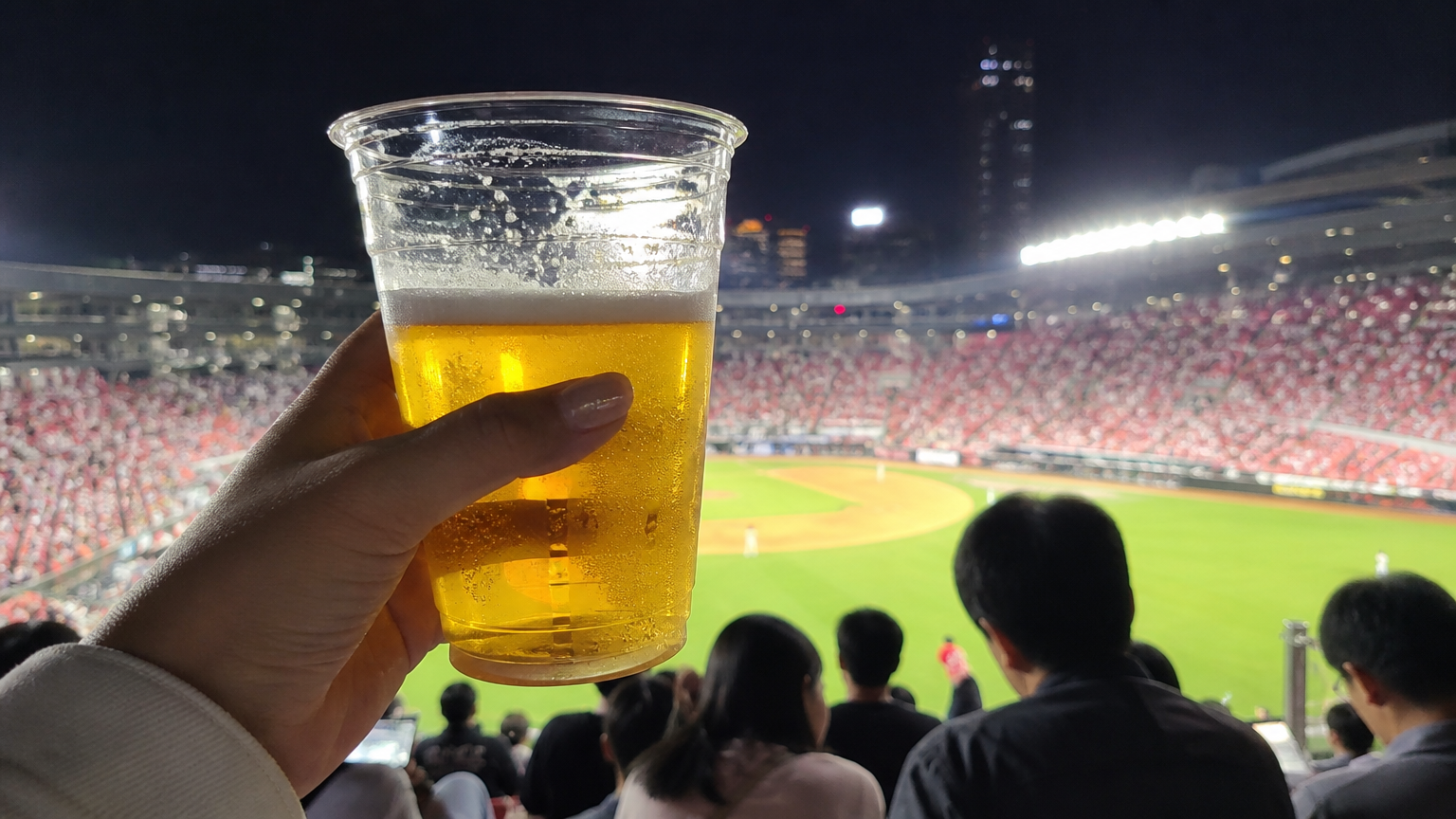
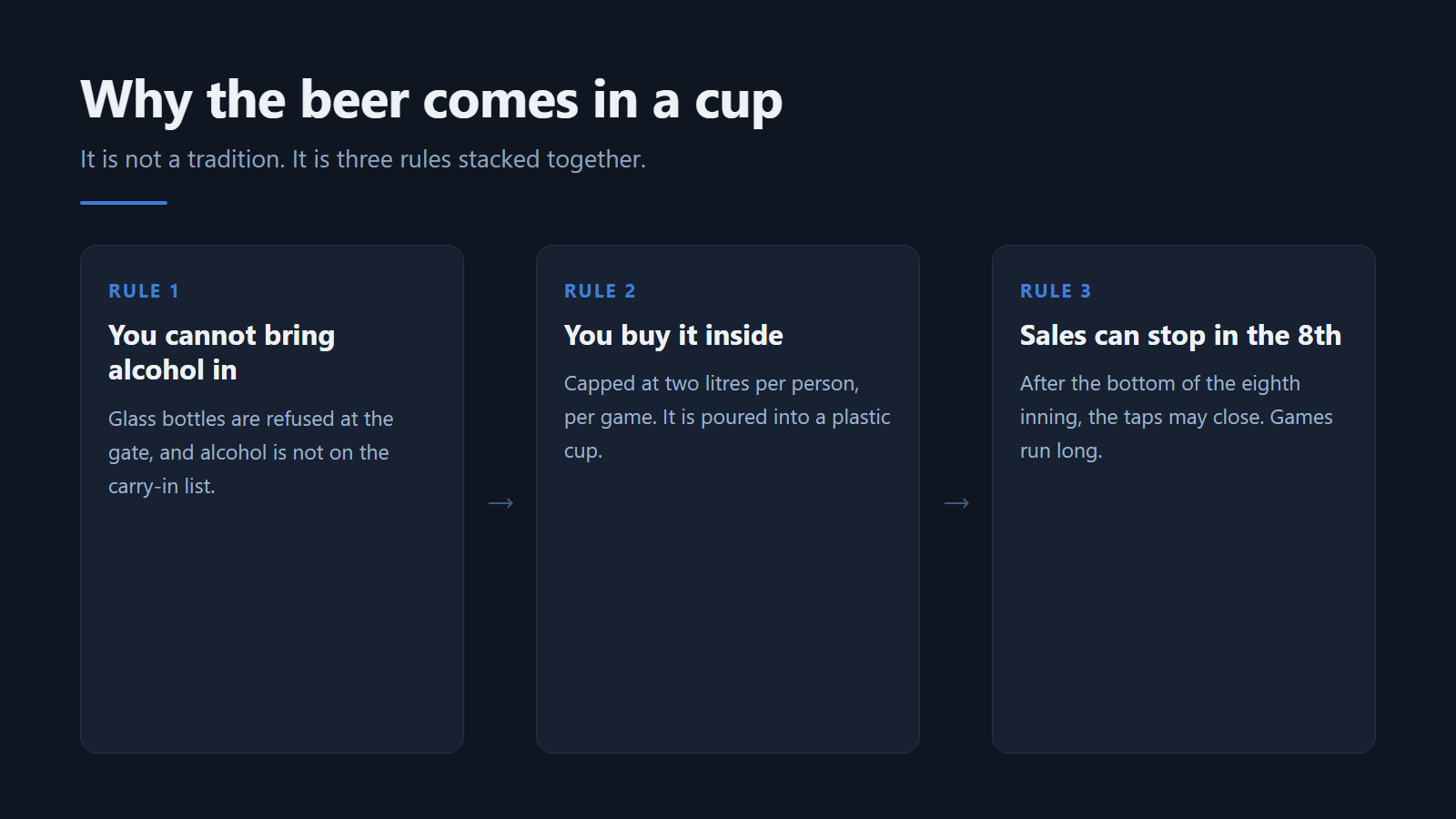
The eighth-inning cutoff is worth knowing if you were planning to pace yourself. Games run long.
Getting the ticket is the hard part, and I have never done it
Here I have to be honest with you. My friend got our tickets. I have never bought a baseball ticket in my life, so everything in this section is what I looked up rather than what I did.
The first thing that confuses visitors is that Jamsil Baseball Stadium has two home teams. The LG Twins and the Doosan Bears share it. Same stadium, same seats, and two different ticketing sites depending on who is at home that day.
| Home team that day | Where tickets are sold |
|---|---|
| LG Twins | TicketLink |
| Doosan Bears | NOL (Yanolja, formerly Interpark Ticket) |
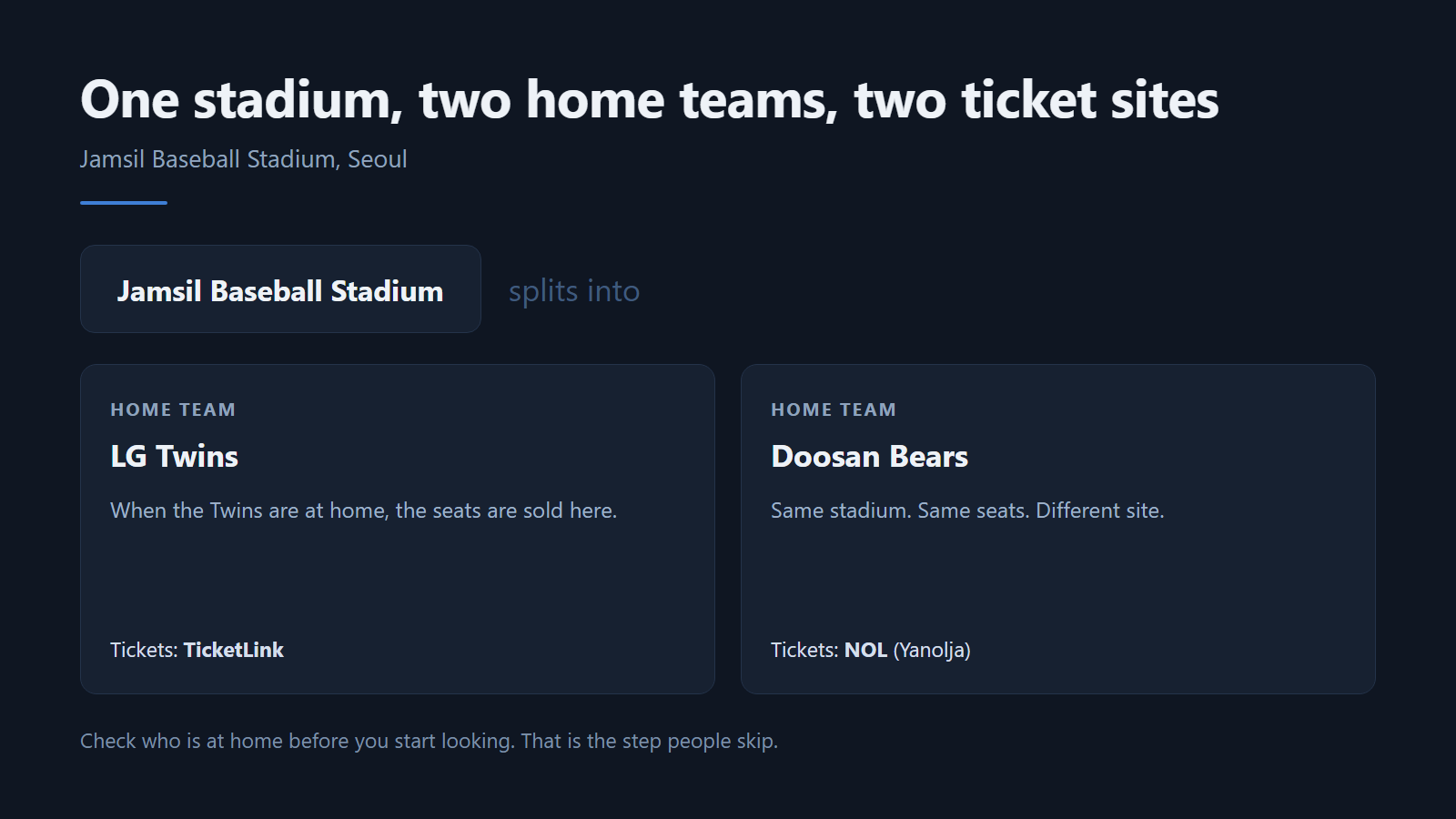
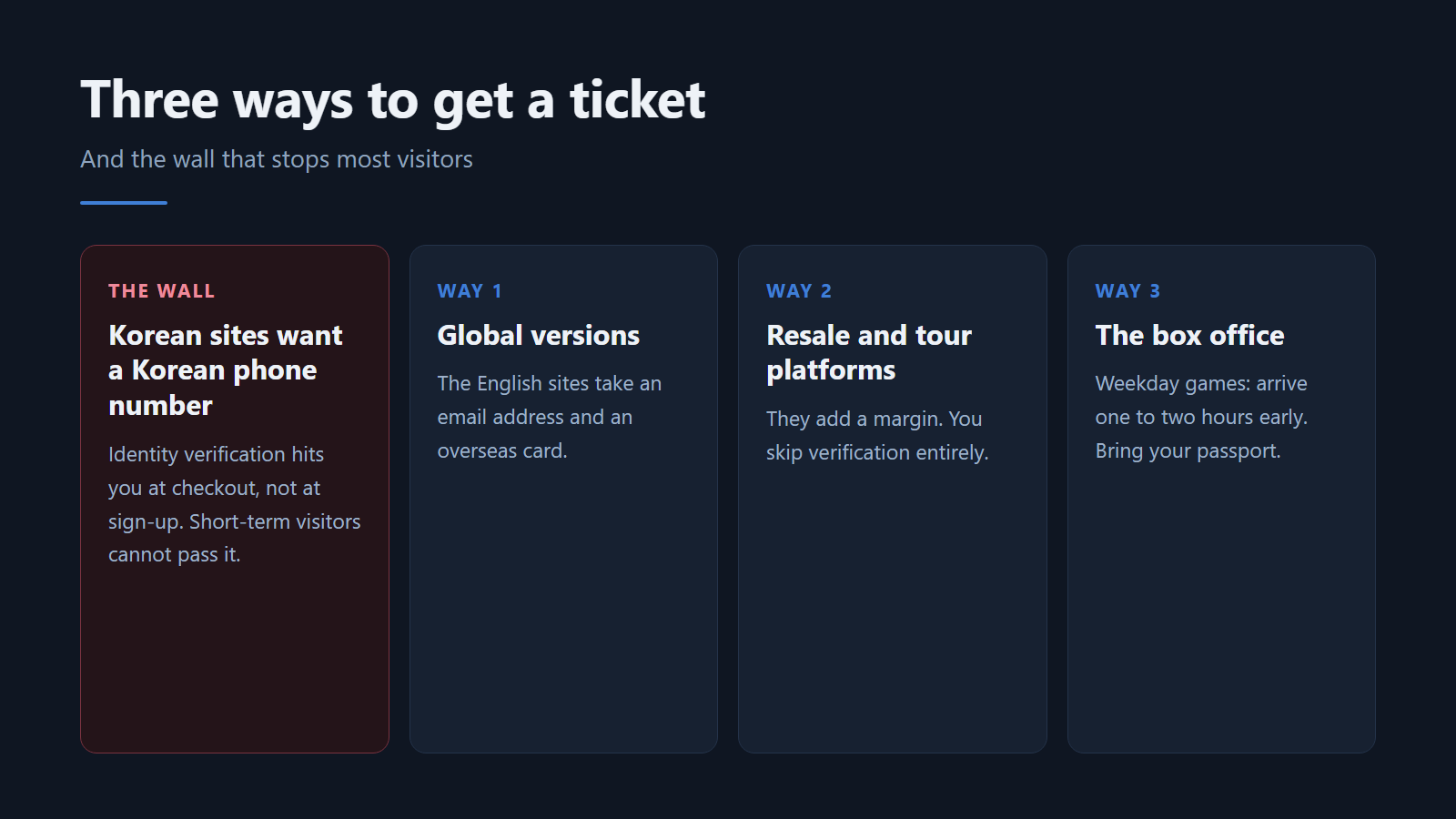
The second thing is worse. Korean ticketing sites verify your identity with a Korean mobile number. If you are visiting for two weeks, you do not have one, and you will hit that wall at checkout rather than at sign-up, which is a bad place to discover it.
There are three ways around it:
-
The global versions of the ticketing sites. TicketLink and Interpark both run English sites that let you register with an email address and pay with an overseas card.
-
Resale and tour platforms. They add a margin, and in exchange you skip the verification problem entirely.
-
The box office. For a weekday game, showing up at the stadium an hour or two before the first pitch is usually enough. Bring your passport.
If your foreign card gets declined partway through any of this, that is a separate and very Korean problem, and I wrote about why your foreign card gets rejected in Korea already.
Where to sit if you want the evening I had
If you only go to one baseball game in Seoul, sit in the outfield.
The outfield sections are where the singing is. They are also the cheapest seats in the stadium, which is a rare case of the good option being the affordable one.
The infield is calmer and closer to the actual sport. Table seats and premium seats exist for people who want to sit down and be comfortable, and they cost several times what the outfield does.
I would not sit in the infield on a first visit. You came for a crowd, and the crowd is in the outfield.
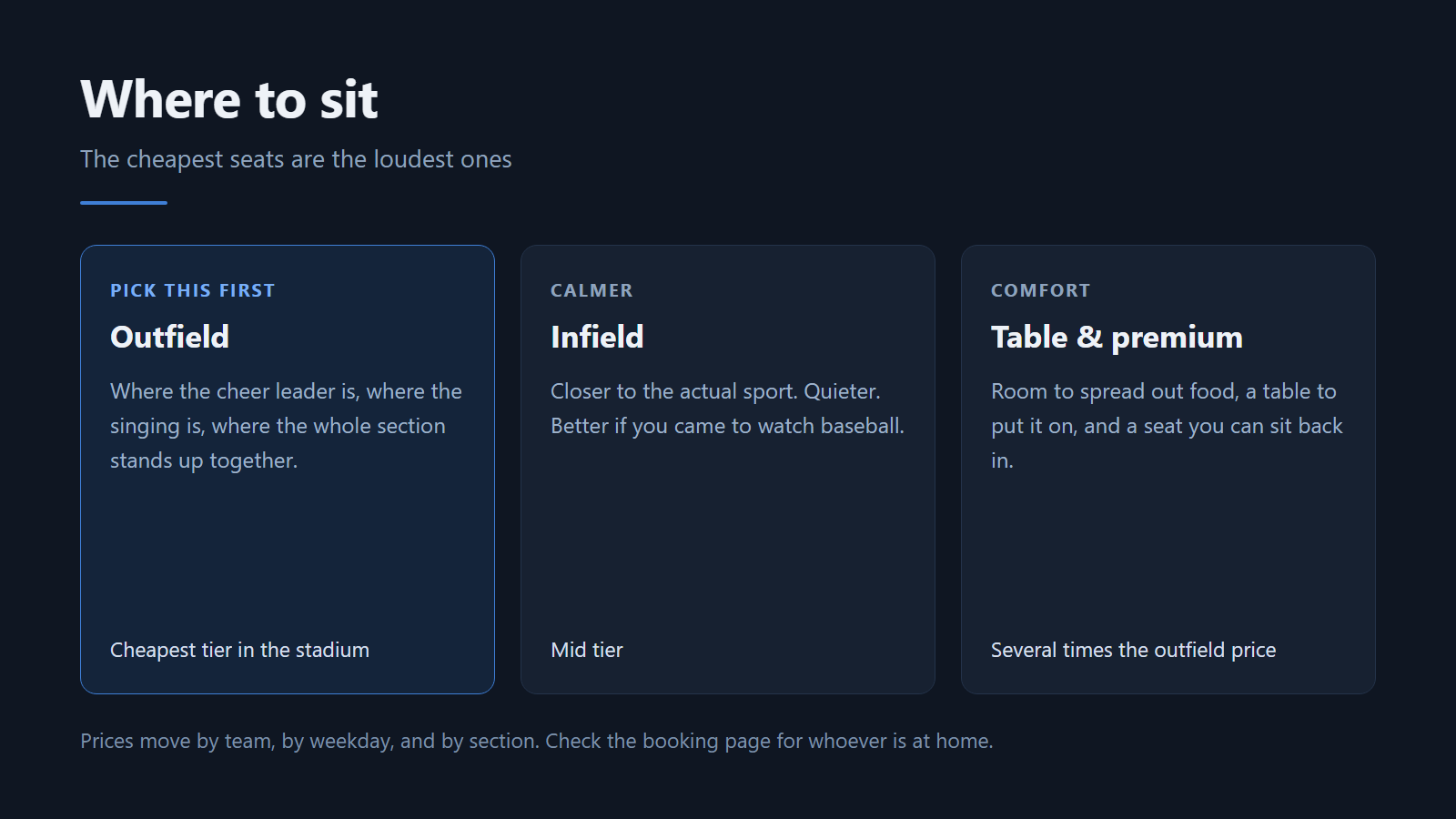
Prices shift by team, by day of the week, and by section, so check the booking page for the team that is at home rather than trusting a number you read somewhere. Weekday games are cheaper and far easier to get into than weekends.
You do not need to know the rules
I want to be plain about this because it is the whole point.
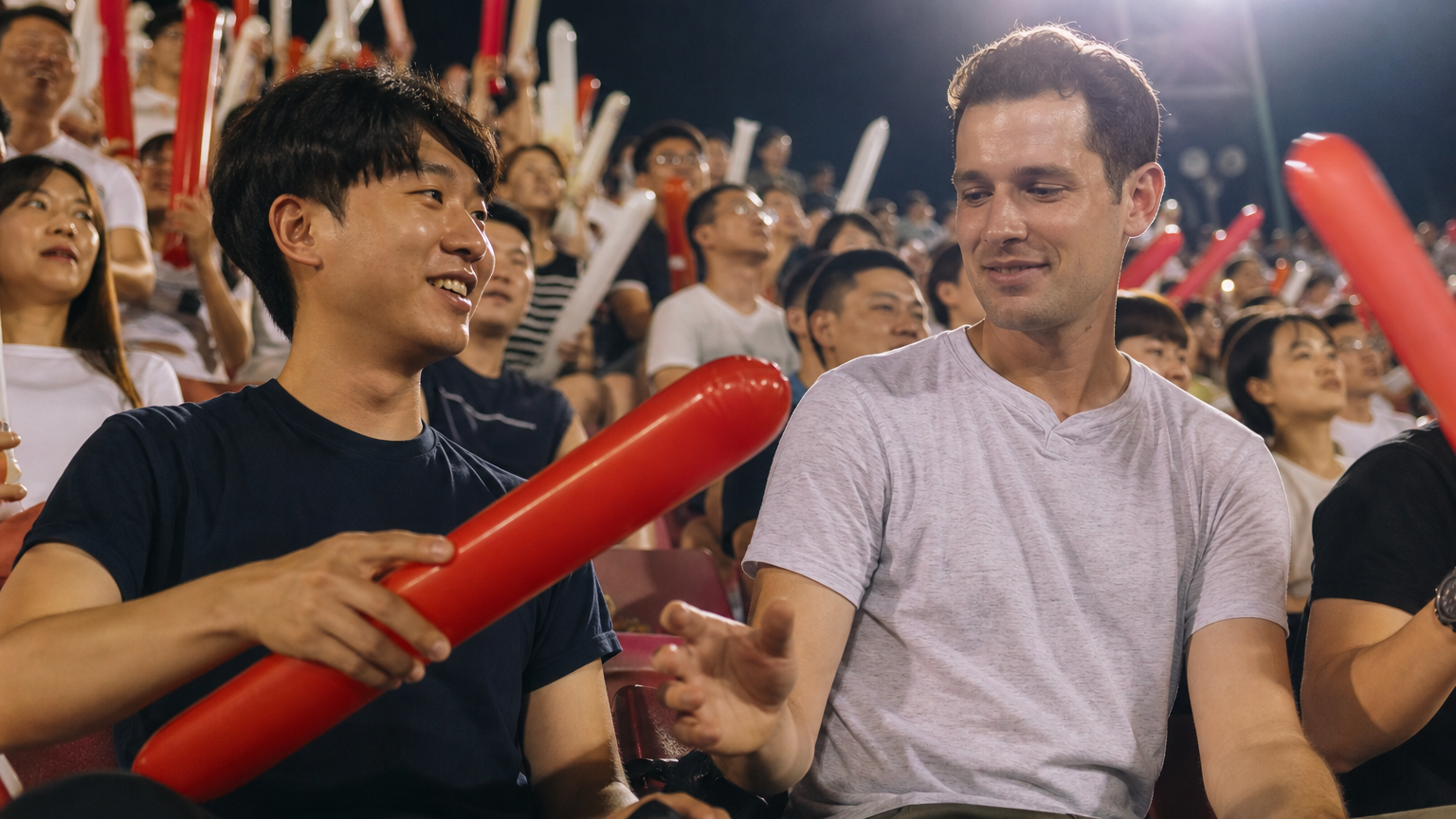
I have been to a baseball game in Seoul without understanding baseball, with a friend who did understand it, and neither of us had a worse night for the gap. Nobody at a Korean baseball game is going to test you. Nobody explained the infield fly rule. The person beside me handed me a stick balloon and I copied what they did with it.
If you are the sort of person who needs to know what is happening, the scoreboard has the count and the crowd tells you the rest. If your section stands up, something good happened. That is genuinely enough.
The season runs from late March into autumn, so if you are here any time between spring and the end of the year, there is probably a game on.
What I would do differently
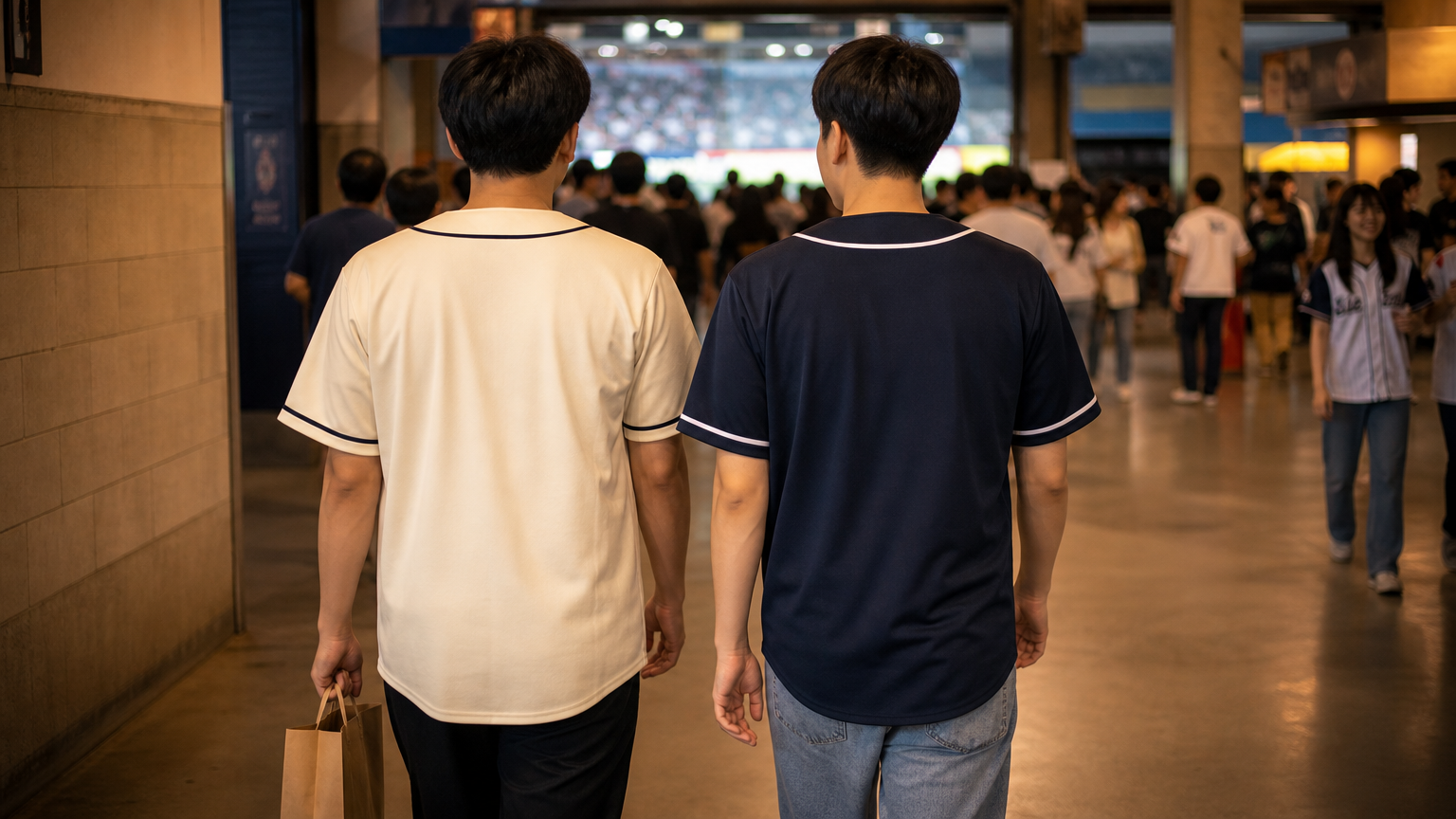
Wear the shirt.
Half the outfield was in team colours and we were the two people in normal clothes. The jerseys are sold at the stadium and everyone wears them, including people who clearly wandered in the same way we did. Next time I am buying two at the gate and making my friend wear one.
That is the only regret I have from the whole evening, which tells you something about how low the bar is for a good night at a Korean baseball game.
FAQ
Can foreigners buy KBO tickets without a Korean phone number?
Not on the standard Korean sites, which require verification with a Korean mobile number. Use the English global versions of TicketLink or Interpark, which accept an email address and an overseas card, or buy at the stadium box office with your passport.
Can I bring outside food into a Korean baseball stadium?
Yes. Outside food is allowed as long as it fits the bag allowance, which is one bag of 45 × 45 × 20 cm plus one shopping bag per person. Hot soup and strong-smelling food may be refused, and coolers are not allowed.
Can I bring my own beer?
No. Alcohol is bought inside the stadium, limited to two litres per person per game, and sales can stop after the bottom of the eighth inning. Glass bottles are not allowed in at all.
Which ticketing site do I use for a game at Jamsil?
It depends on which of the two home teams is playing at home. LG Twins games are sold through TicketLink, and Doosan Bears games through NOL. Check who is at home before you start.
Do I need to understand baseball to enjoy it?
No. At a baseball game in Seoul most of the crowd is following the cheer leader rather than the game. Copy the section you are sitting in and you will be doing it correctly.
When is the KBO season?
The regular season opens in late March and runs through the autumn, with each team playing 144 games. There is a short All-Star break in July.