Korean Age: The Law Changed in 2023, But We Still Count the Old Way

Two years ago the government made me a year younger, and nobody noticed.
That is the honest state of it. In June 2023 a law took effect declaring that ages in laws, contracts and official documents mean international age — the one you already use. On paper the confusing system was retired. In practice, when someone asks how old I am at a dinner table, I still answer with the old number, and so does everyone else. This guide covers what korean age actually means, all three ways this country counts, what the 2023 law changed, and the one place where getting it wrong will stop you at a counter.

Korean age is three numbers, not two
Most explanations give you two. There are three, and the third is the one that catches people out.
| System | How it works | Where it applies now |
|---|---|---|
| International age | 0 at birth, +1 on your birthday | Laws, contracts, documents, medical, official everything |
| Counting age | 1 at birth, +1 for everyone on 1 January | Conversation, relationships, most daily life |
| Calendar-year age | Current year minus birth year | Alcohol and tobacco, military service |
The second one is why a baby born on 31 December is two years old on 2 January. It is not a joke about Korean maths — the year itself counted as a year of life, and the new year adds another to everyone at once.
What the 2023 law actually did
On 28 June 2023 the law came into force, changing the civil code and the general administrative law so that any age written without further specification means international age.
What that fixed was real. Before it, the same word could mean two different numbers depending on which document you were reading — insurance policies, employment rules, dosage instructions. Ambiguity in a contract is not charming. It was a genuine problem and it is now solved.
What it did not do — and was never going to do — is change how people talk.

The part that did not change: buying alcohol
This is the one that will actually affect you, so read this bit twice.
Alcohol and tobacco do not use international age. They use calendar-year age: current year minus birth year. Your birthday is irrelevant.
That means everyone born in the same year crosses the line on the same day — 1 January — regardless of when in the year they were born. If you were born in November and the cutoff year has arrived, you can buy from January, months before your actual birthday.
It cuts the other way too. If the year has not arrived yet, having had your birthday does not help you.
Practical version: what the clerk looks at is the year on your passport, not the date. Carry the passport. A foreign driving licence is often refused.

Military service uses the same rule
The other surviving exception is conscription. Eligibility is also reckoned by calendar year rather than by birthday.
This one will not affect you as a visitor, but it explains something you may notice: Korean men talk about their service year as a fixed cohort, everyone born in a given year moving together. That is the same arithmetic as the alcohol rule.
Why anyone asks your age in the first place
To a lot of visitors this is the genuinely strange part. You have met someone for ninety seconds and they want your birth year.
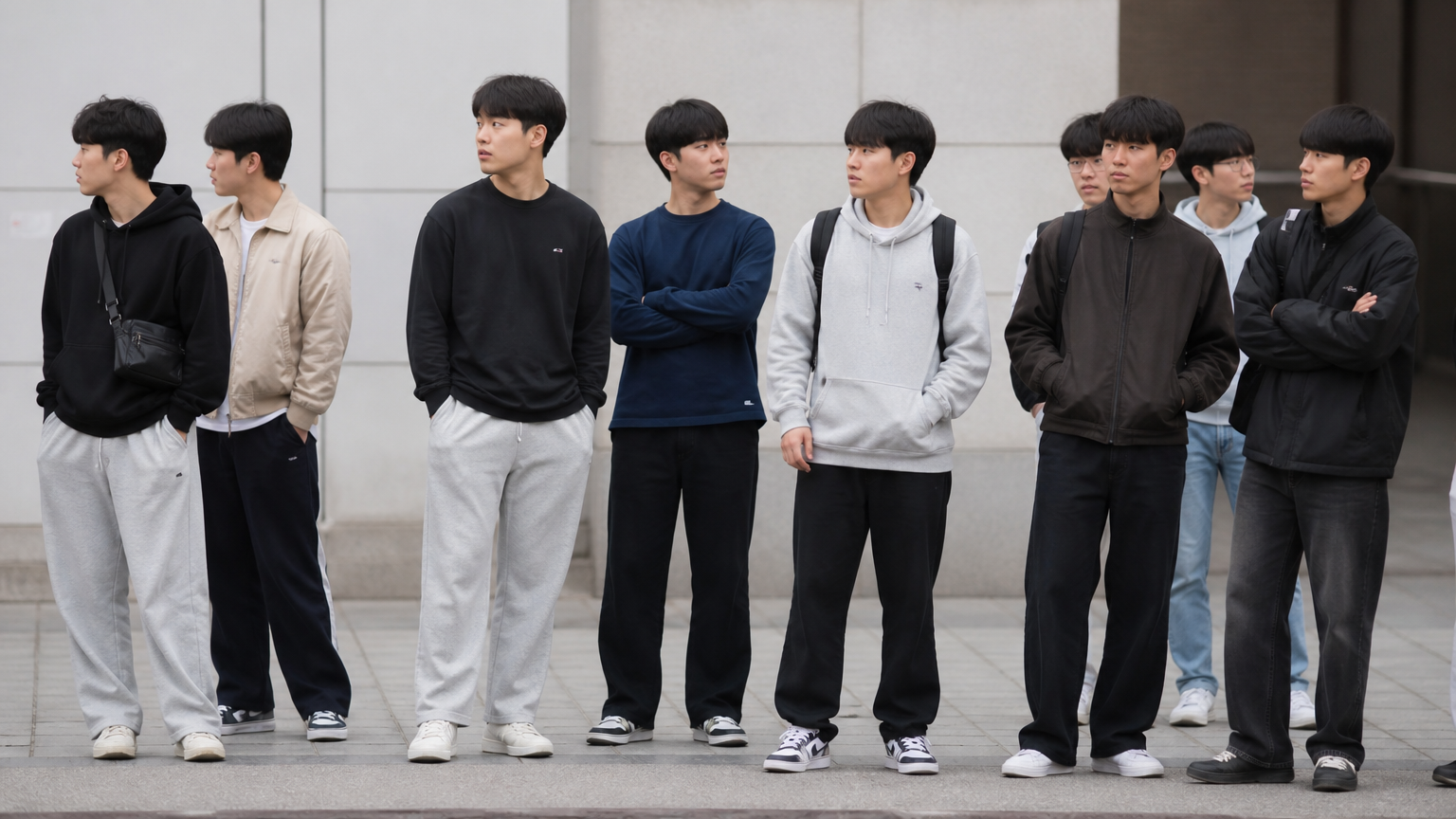
It is not nosiness. The language has different verb endings and different words depending on relative seniority, and there is a whole vocabulary of relationship terms — the words for older brother, older sister, senior at school or work — that cannot be used until the relative order is established. Until someone knows whether you are older or younger, they do not know which version of the language to speak to you in.
So the question is not "how old are you". The question is closer to "how should I talk to you".

How to answer when someone asks
Give your birth year. Not your age — the year.
This is what Koreans increasingly do with each other anyway, precisely because of the confusion described above, and it sidesteps the entire problem. "Ninety-four." Done. Whoever is asking will do their own arithmetic in whichever system they are using.
If you want to know how to say it, the year is usually given as the last two digits.

Do not worry about getting it wrong
Here is the reassuring part, and I mean it.
Nobody expects a visitor to navigate this. If you state your international age, you will be understood. If you are off by one in either direction, no one will correct you, and no one will think less of you.
The only place precision matters is the counter at the convenience store, and there the rule is simple and mechanical: the year on your document.

What this looks like from the inside
I turned a year younger on paper in 2023 and it changed nothing about my life. My friends still call each other by the old numbers. My relatives at the harvest holiday still work out seniority the old way over dinner.
The law was written for contracts and it fixed contracts. Habits are not contracts, and two years is not very long. Ask me again in twenty.

FAQ
How do I calculate my korean age?
Take your international age and add one if your birthday has already passed this year, or two if it has not. That gives you the number people use in conversation.
Did the 2023 law abolish the old system?
Only for official use. Laws, contracts and documents now mean international age by default. Conversation, relationships and social seniority still run on the old counting system, and two areas were deliberately left out of the change entirely.
Can I buy alcohol on my birthday if I just turned of age?
Not necessarily, and this is where people get caught. Alcohol uses current year minus birth year, so your birthday is irrelevant — only the year on your document counts.
Why do Koreans ask my age when we first meet?
Because the language requires knowing relative seniority before choosing which speech level and relationship terms to use. It is a grammatical requirement, not personal curiosity.
What is the easiest way to answer?
Say your birth year rather than a number. It avoids all three systems at once and it is what many Koreans now do with each other.
One last thing
Every country has a gap between what the law says and what people actually do. This one just happens to be measurable in years.
If you take one thing away from all this korean age arithmetic, take this: in conversation you are probably a year or two older than you think you are, and at the counter only the year on your passport exists.