Soy Marinated Crab in Seoul (Ganjang Gejang): What It Is, and Where to Eat It

My friends abroad ask me the same question before they land in Seoul: what do Koreans actually eat that tourists never order? My answer has been the same for years, and it makes most of them pull a face.
Raw crab. Uncooked, cured in soy sauce, eaten cold with a bowl of hot rice.
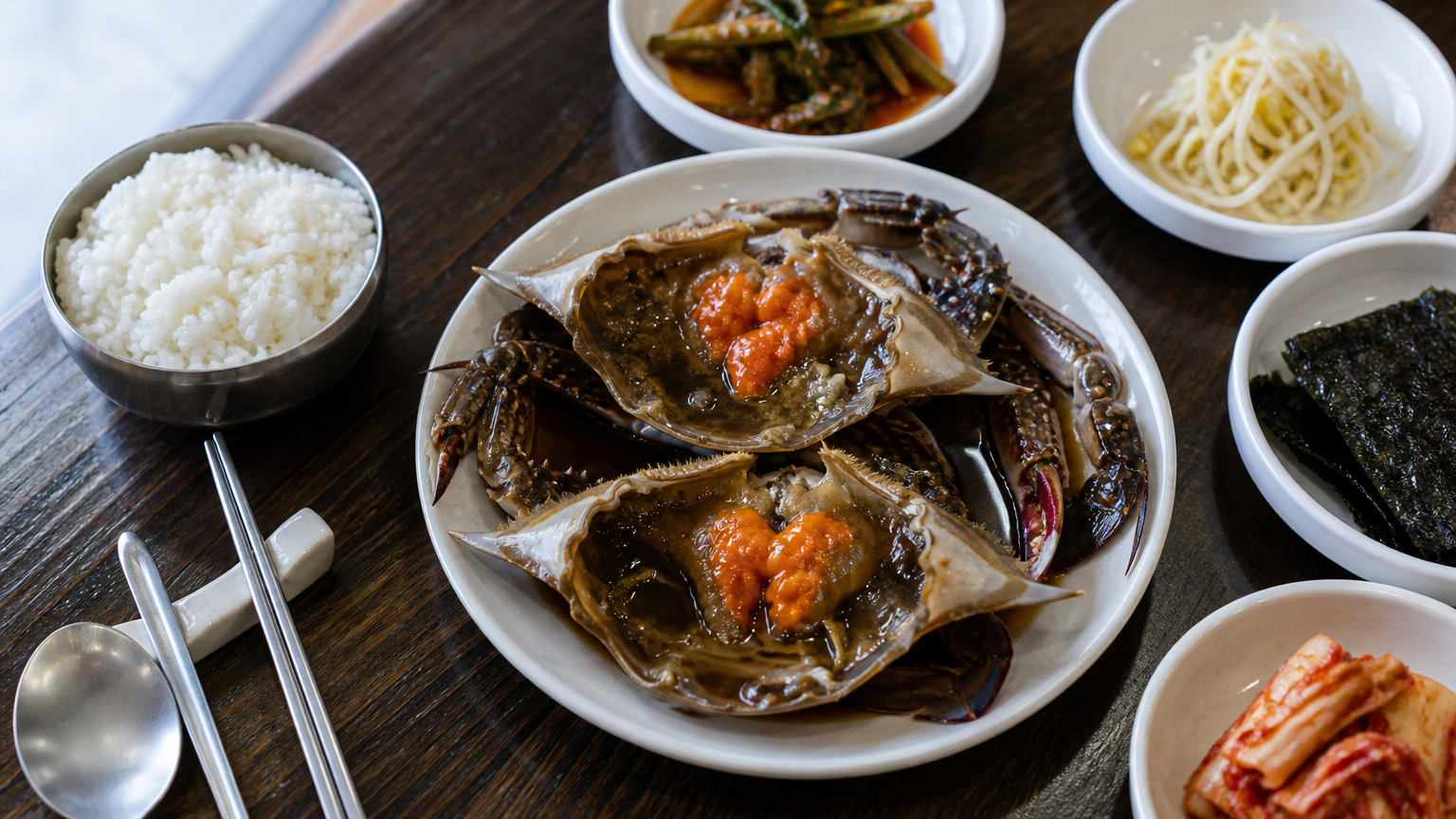
That reaction is fair. But the dish has a nickname in Korean that tells you how we feel about it: 밥도둑 (bapdoduk) — "the rice thief." It steals your rice. You sit down meaning to eat one bowl and you order a second.
What Soy Marinated Crab Actually Is
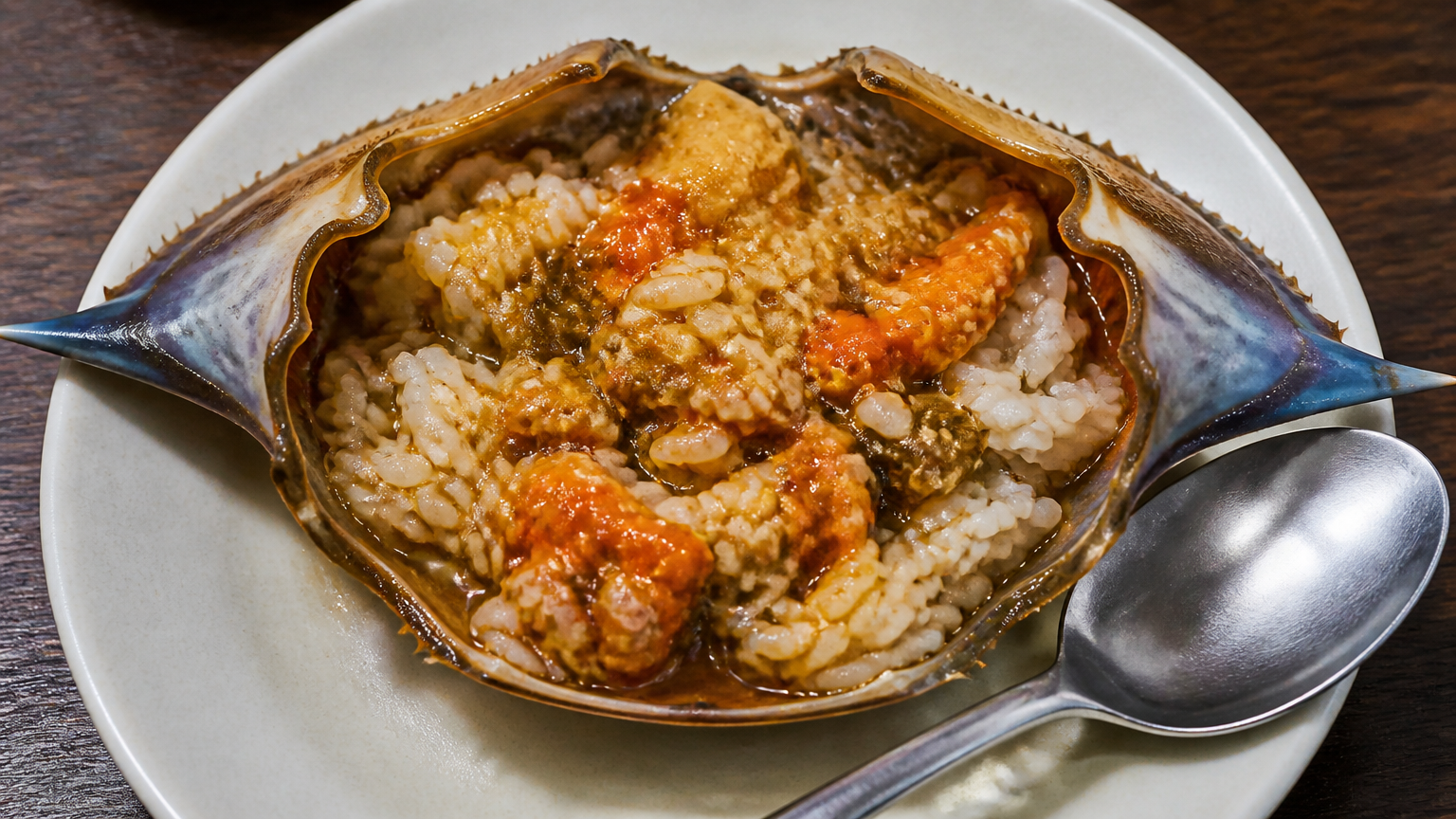
Ganjang gejang is raw blue crab cured in a soy-sauce brine. No heat touches it. The brine — soy sauce simmered with vegetables, dried seafood, and aromatics, then cooled — does the work over several days in the fridge.
The result isn't "fishy." The texture of the raw crab meat is closer to a soft scallop than to anything you'd call seafood-forward, and the brine carries the flavour: salty, faintly sweet, deeply savoury.
Two things separate a good plate of soy marinated crab from a mediocre one, and both are about the crab, not the sauce:
-
Female crabs with roe. The orange roe packed into the shell is the part people fight over. Restaurants that use female crabs (암꽃게) say so, loudly.
-
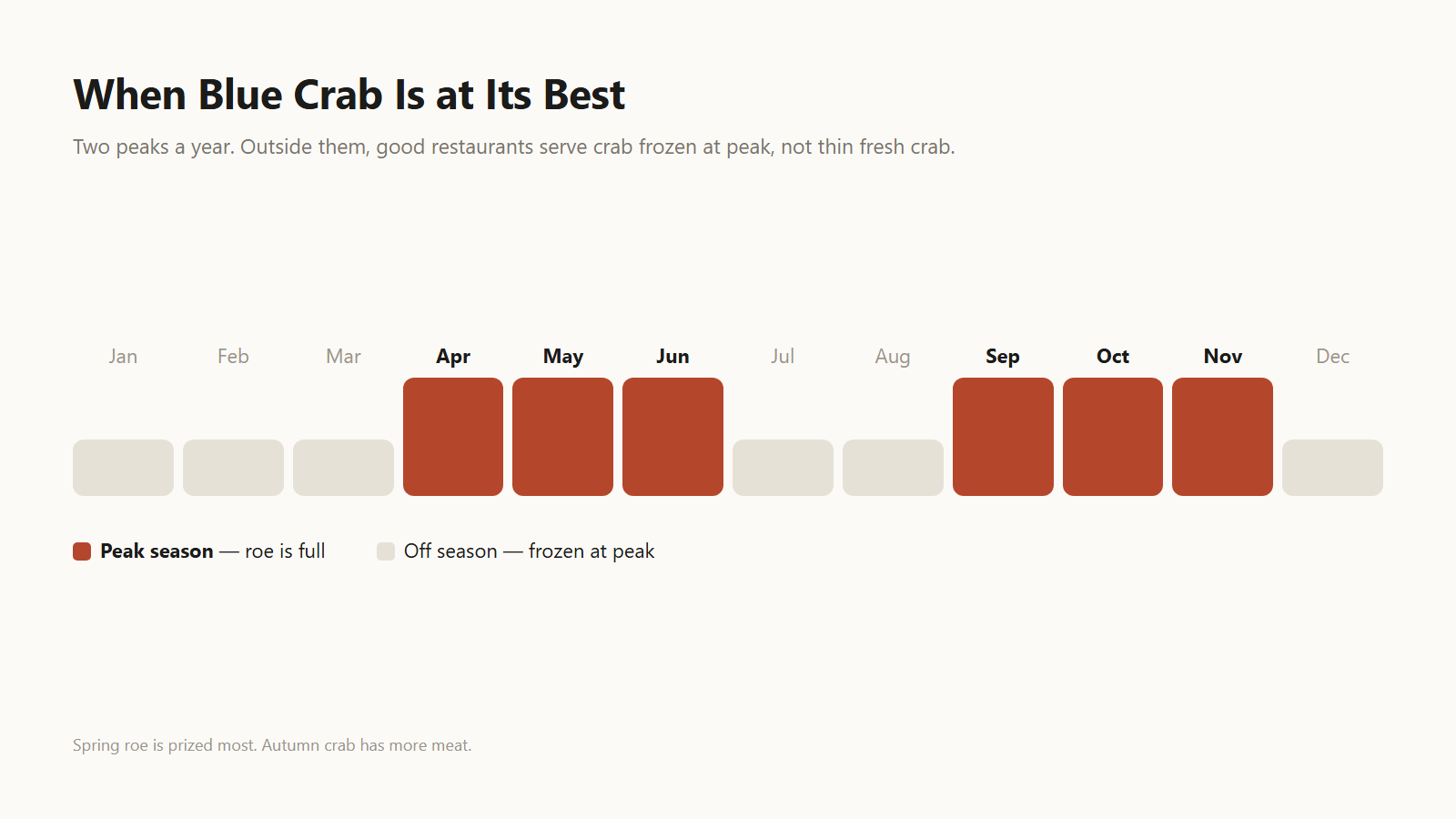
Season. Blue crab is at its best in spring and again in autumn. Good restaurants freeze at peak season rather than serve thin crab in summer.
Ganjang vs Yangnyeom: The Two Kinds
Nearly every gejang restaurant serves both, and menus rarely explain the difference in English.
| Ganjang gejang (간장게장) | Yangnyeom gejang (양념게장) | |
|---|---|---|
| Base | Soy sauce brine | Chili paste and chili flakes |
| Colour | Dark amber, translucent | Bright red, opaque |
| Heat | None | Moderate to strong |
| Eaten with | Plain rice, in the shell | Plain rice, mixed |
| If it's your first time | Start here | Order as a side |
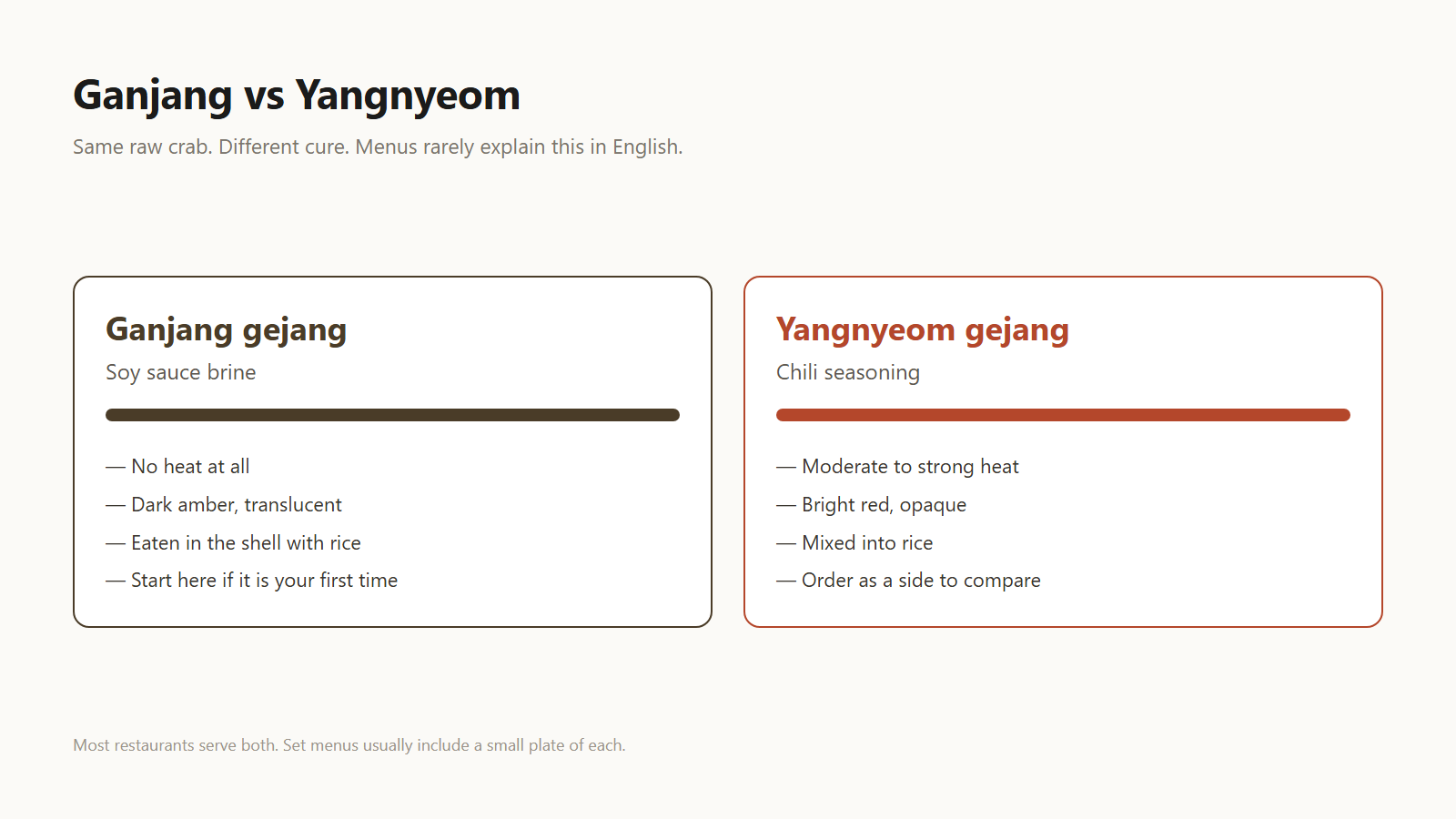
If you order a set menu, most places bring a small plate of the spicy version alongside the soy one. That's the easiest way to try both without committing.
How to Eat It Without Looking Lost
There is a sequence, and nobody explains it to you.
-
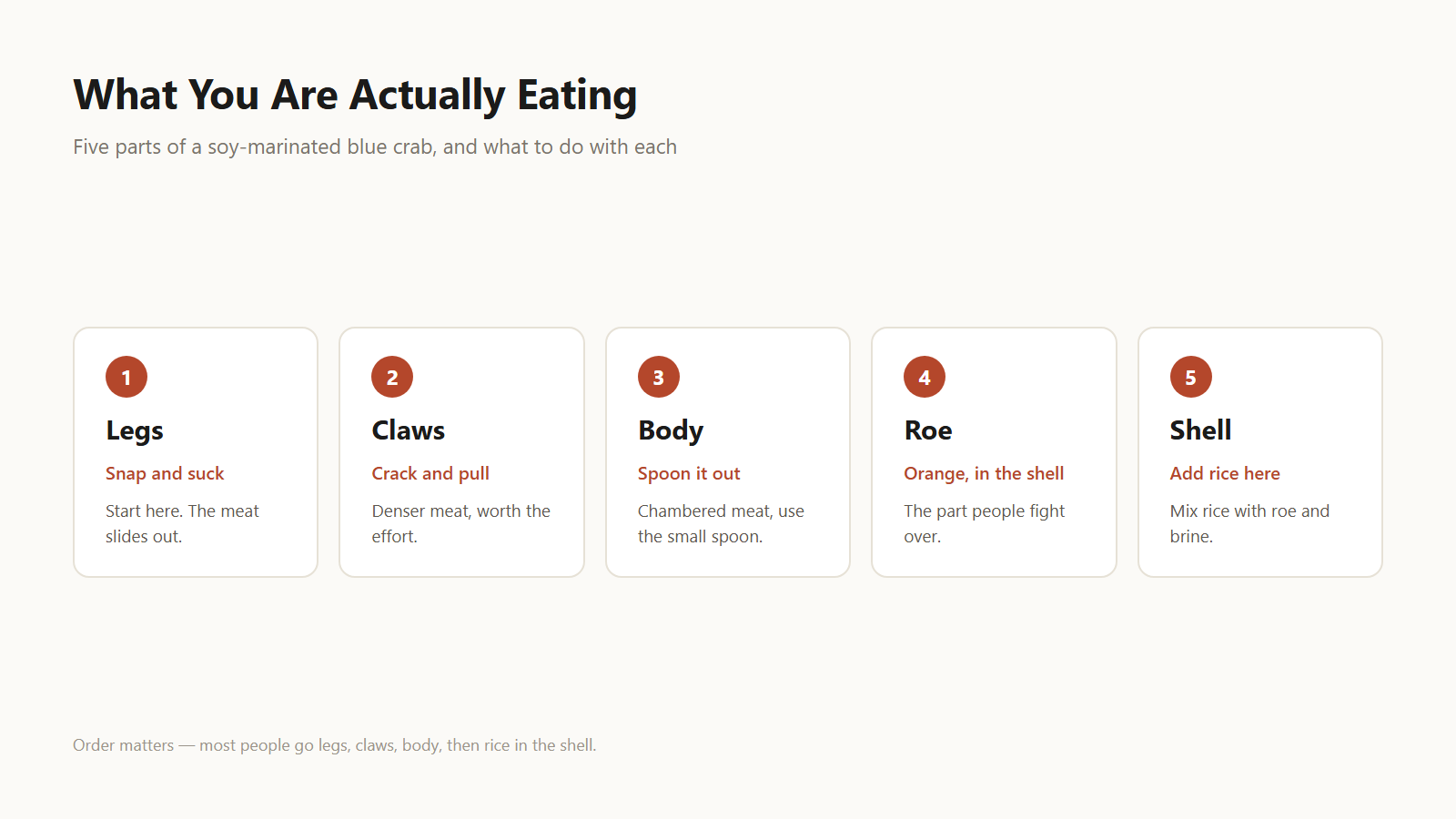
Legs first. Pick one up and suck the meat out. Don't be shy about the noise — this is a hands-and-mouth dish, and everyone at the next table is doing the same.
-
Then the body. Use the small spoon to scrape the meat from the chambers.
-
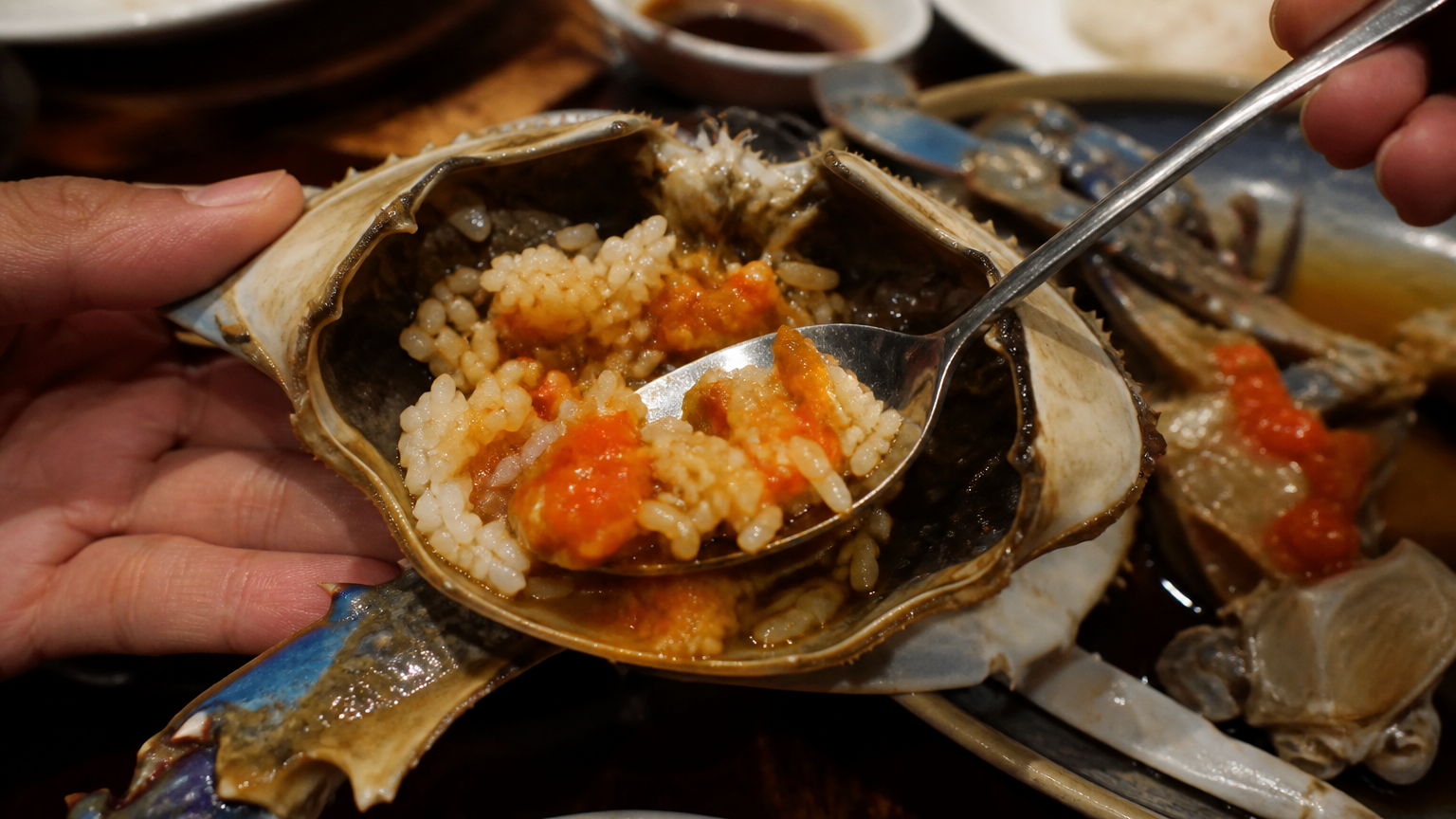
Then the shell. This is the part that matters. Tip a spoonful of rice into the upturned shell, where the roe and the brine have pooled. Mix it in the shell.
-
Eat it out of the shell. That mouthful is why the dish is called the rice thief.
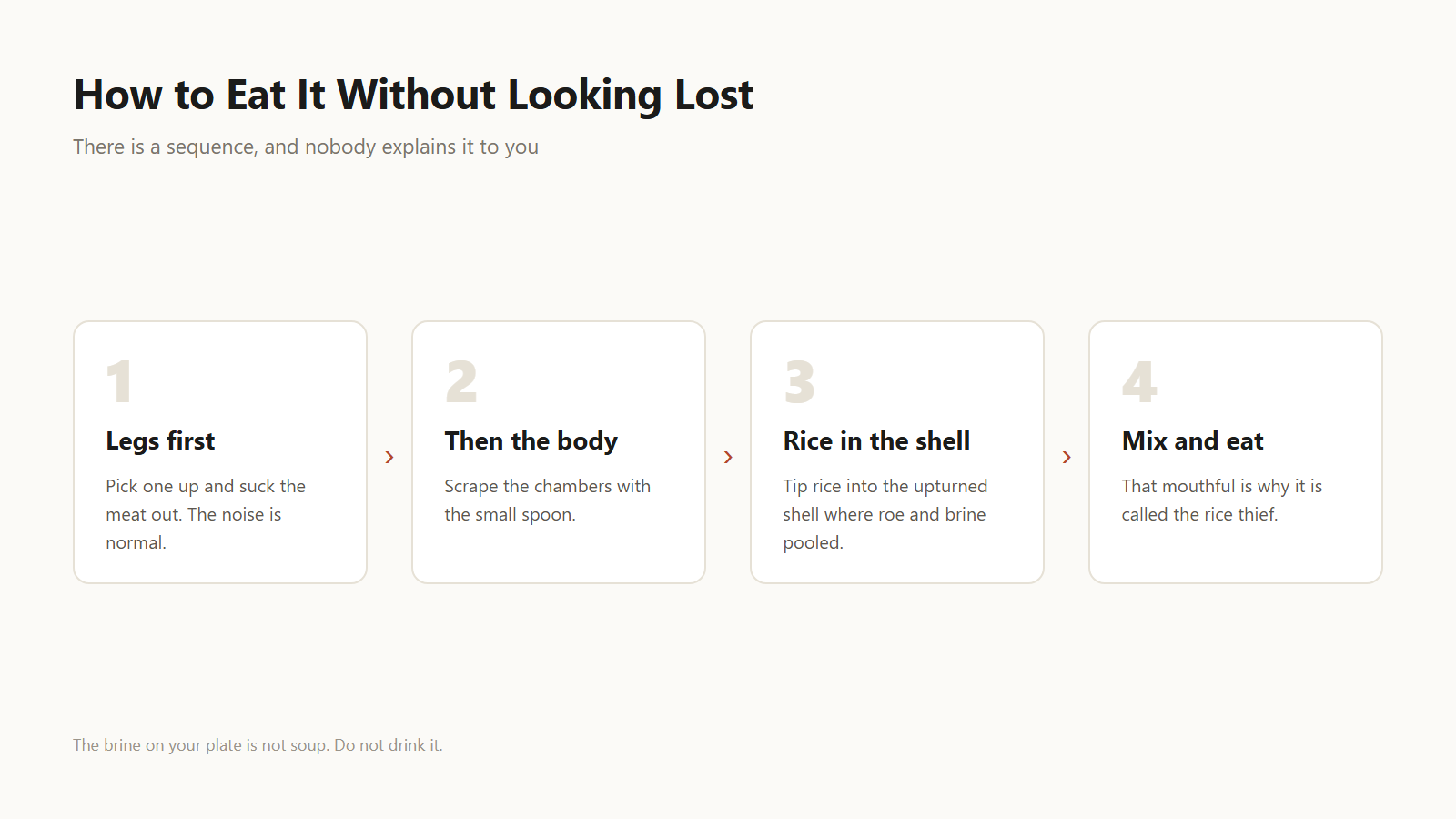
Two small things: wet wipes are always on the table, and the brine on your plate is not soup. Don't drink it.
Where to Eat Ganjang Gejang in Seoul
Six places, spread across the neighbourhoods you're most likely to already be in.
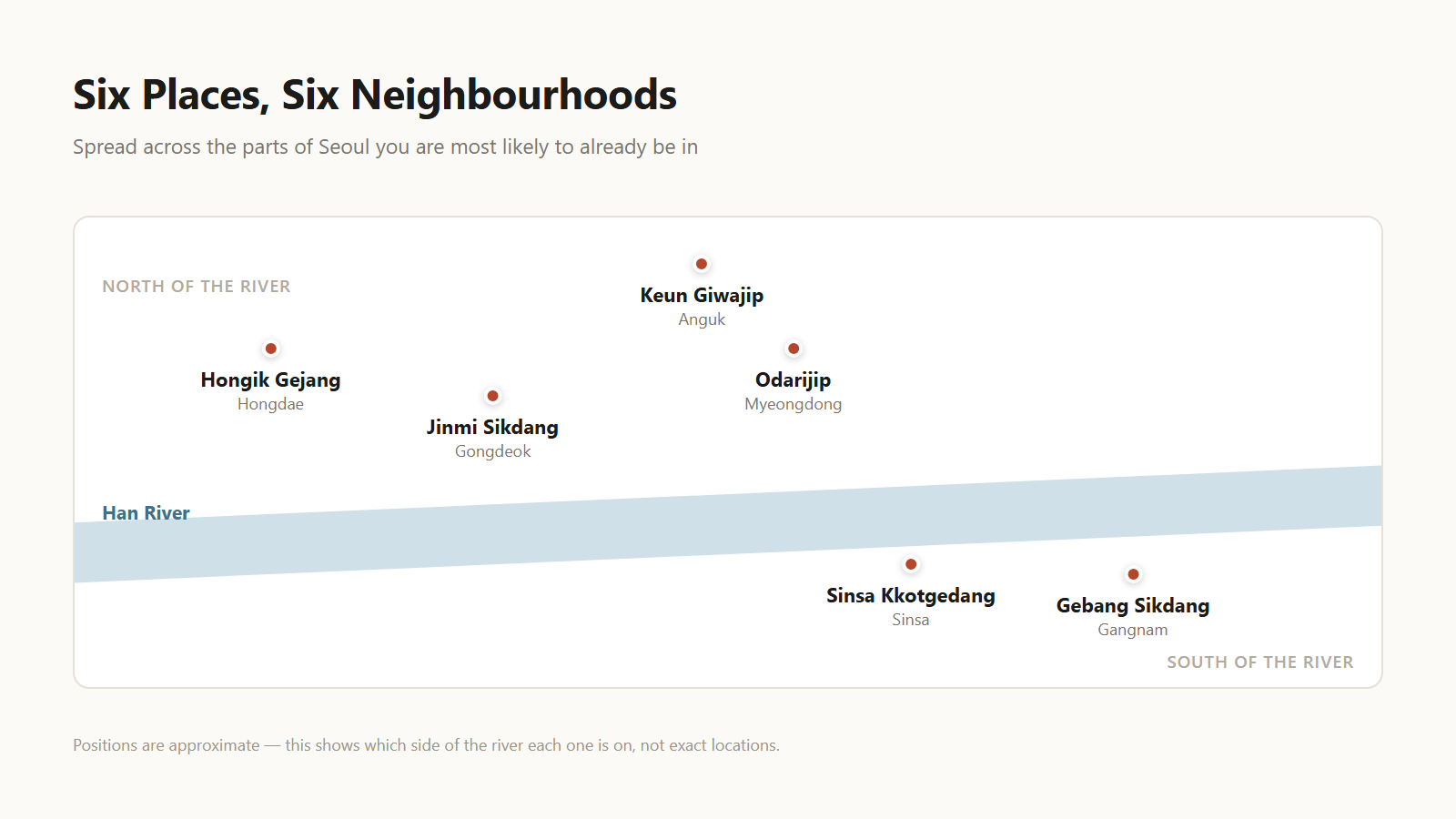
| Restaurant | Area | Ganjang gejang price | Hours |
|---|---|---|---|
| Odarijip (오다리집) | Myeongdong | ₩20,000–50,000 | 08:10–24:00, daily |
| Gebang Sikdang (게방식당) | Gangnam | approx. ₩40,000 (set) | 11:30–15:00 / 17:30–21:00, closed Sun |
| Jinmi Sikdang (진미식당) | Gongdeok | ₩45,000 | Phone reservation only |
| Keun Giwajip (큰기와집) | Anguk / Bukchon | ₩59,000 | 11:30–21:00, daily |
| Sinsa Kkotgedang (신사꽃게당) | Sinsa | ₩88,000 (medium) | 11:30–23:30, daily |
| Hongik Gejang (홍익게장) | Hongdae | All-you-can-eat, call ahead | 11:30–21:30, closed 5th Wed |
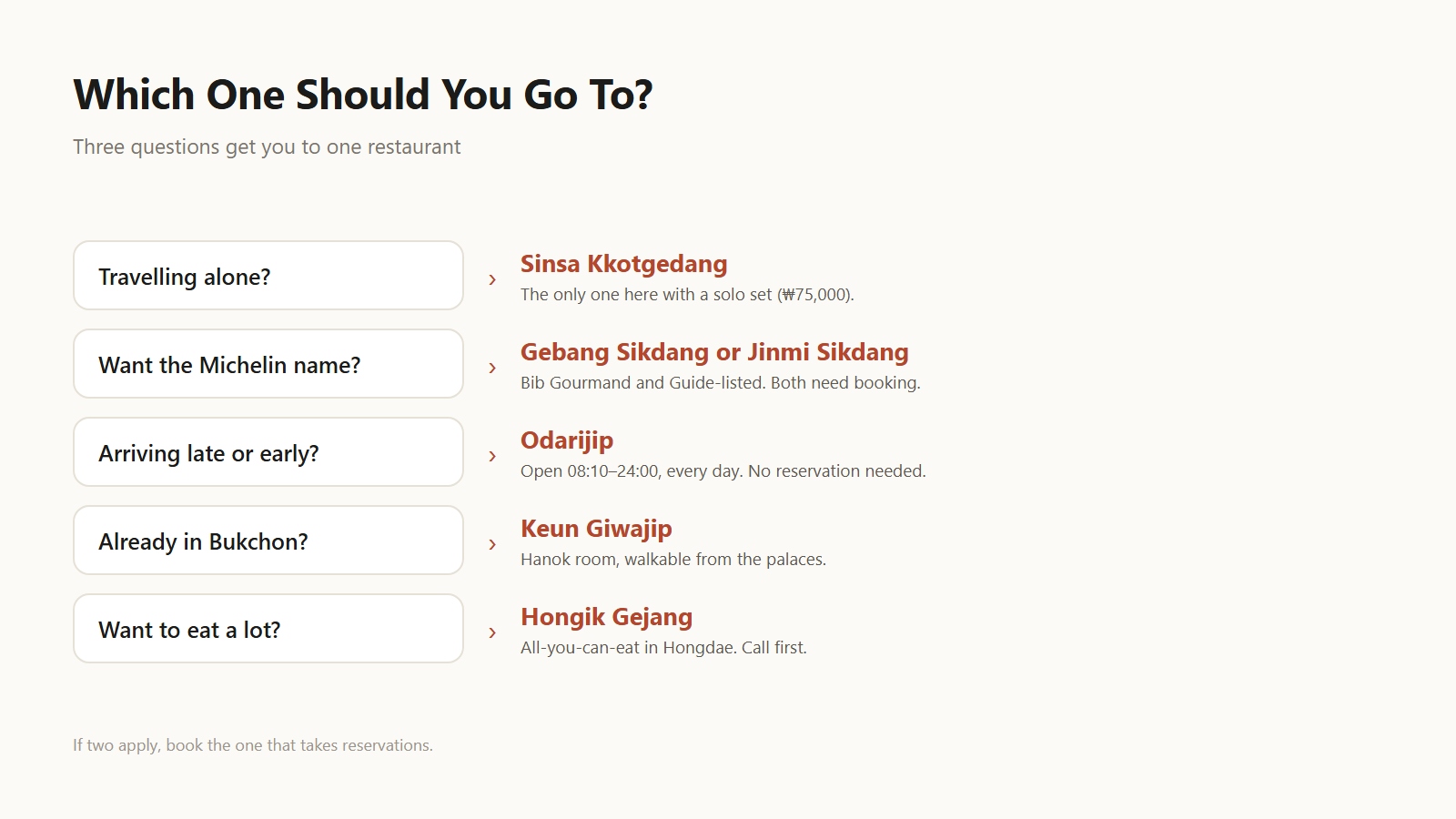
Odarijip, Myeongdong — the easiest one to walk into. Two to three minutes from Myeongdong Station (Line 4) Exit 6, second and third floor. Open from 8:10 in the morning until midnight, which no other place on this list does. They use female crabs from Yeonpyeongdo, cured seven days.
Gebang Sikdang, Gangnam — in the Michelin Guide as a Bib Gourmand. Female blue crabs from South Jeolla, brine fermented with dried seafood and vegetables. Book through Catchtable; the set price moves with the market, so ask when you reserve.
Jinmi Sikdang, Gongdeok — listed in the Michelin Guide, and the closest thing Seoul has to a single-dish institution. Reservations by phone only. They prepare only the day's quantity, so walking in on a weekend rarely works.
Keun Giwajip, Anguk — a hanok-style room in Bukchon, so it doubles as somewhere to sit down after the palace walk. Their soy base is aged seven years and they use crab from Seosan only.
Sinsa Kkotgedang, Sinsa — the one I've actually eaten at, and the only place here with a solo set (₩75,000), which matters if you're travelling alone. Open until 23:30 with no regular closing day.
Hongik Gejang, Hongdae — all-you-can-eat gejang, roughly ten minutes on foot from Hongik University Station Exit 1. Prices aren't published; call before you go.
I've only sat down at one of these six myself. Sinsa Kkotgedang — and a full write-up of that visit is coming in the next post, including what it actually cost and who I ran into. The other five are the ones that come up again and again in Korean listings and in the Michelin Guide, which is a different kind of evidence and I'd rather say so than pretend otherwise.
What I'd Tell a Friend Before They Go
-
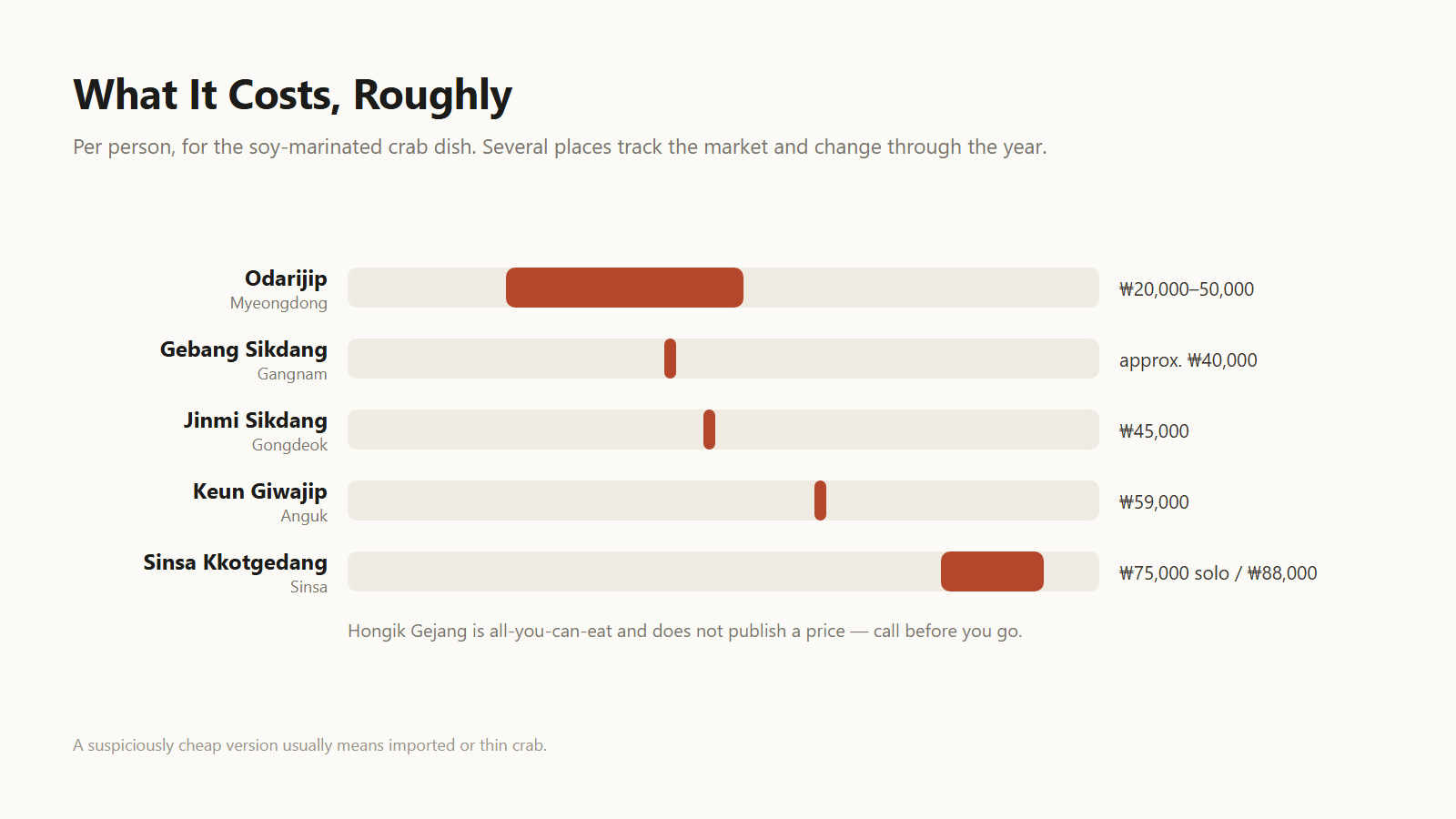
Budget ₩40,000–90,000 per person. This is not a cheap meal in Korea, and a suspiciously cheap version usually means imported or thin crab.
-
Reserve where you can. Jinmi takes phone bookings only; Gebang uses Catchtable.
-
Go at lunch. Same crab, shorter queue, and several places close between services.
-
Ask for 공기밥 추가 (gonggibap chuga) — an extra bowl of rice. You will want it.
FAQ
Is raw crab safe to eat?
Restaurants that specialise in soy marinated crab use farmed or flash-frozen blue crab and cure it in high-salinity brine under refrigeration, which is what makes it a stable dish rather than a gamble. Stick to dedicated gejang restaurants rather than ordering it as a side dish somewhere that doesn't specialise, and skip it entirely if you're pregnant or immunocompromised.
How is yangnyeom gejang different?
Same raw crab, different cure. Ganjang gejang uses a soy-sauce brine and has no heat; yangnyeom gejang uses a chili-based seasoning and is spicy. Most restaurants serve both, and set menus usually include a small portion of each.
How much should I expect to pay?
Between ₩40,000 and ₩90,000 per person depending on the restaurant and the size of the crab. Prices at several places track the market and change through the year.
Can I get soy marinated crab to go?
Some places do takeaway, including Hongik Gejang. It does not travel well over long distances and it isn't something you can carry home on a flight, so treat it as a same-day meal.
Do I need to speak Korean?
The restaurants in tourist-heavy areas — Myeongdong, Hongdae, Sinsa — generally have English menus or picture menus. Phone-reservation-only places like Jinmi Sikdang are harder without Korean; ask your accommodation to call.
Sources
Opening hours and prices change. These are the pages I checked while writing, and the ones to check again before you go.