Hanbok Rental in Seoul: Prices, Where to Go, and the Free-Palace Rule That Trips People Up

Every friend who visits me in Seoul eventually asks about hanbok, and they always ask it the same careful way: is it weird if I wear one?
They are worried it looks like a costume. Then they worry about the price. Then they get to the palace ticket booth wearing a jeogori over their jeans, and the staff charges them full admission, and they have no idea why.
Here is the part nobody explains. The free palace entry is not a tourist promotion. It is a national policy for people wearing Korean clothes, and because it is a policy, it has a written definition. Half a hanbok does not count.
So before you book a hanbok rental in Seoul, let me give you the three things I tell my own friends: what the rule actually says, what the day actually costs, and how to plan it so you are not sprinting to a closed gate.
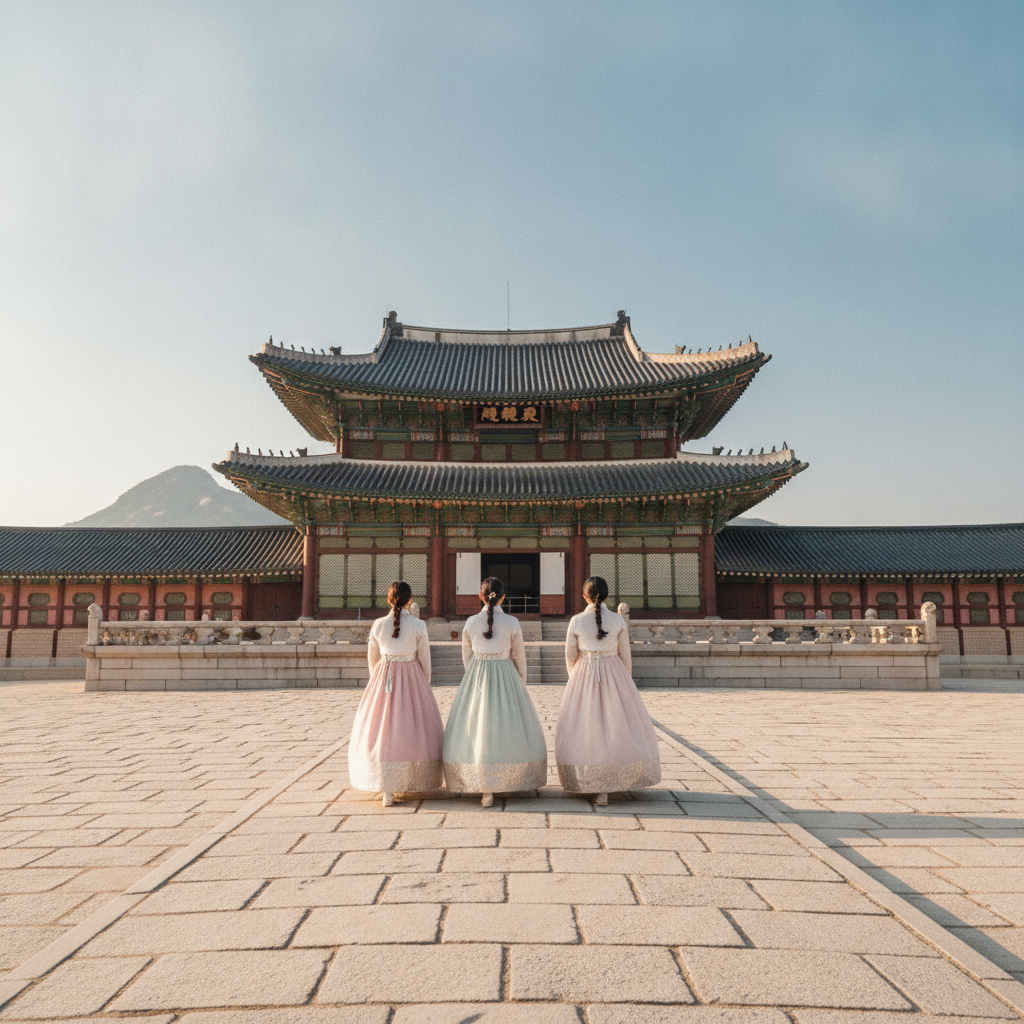
The rule that decides whether you walk in free
Korea's Heritage Service lets anyone wearing hanbok into the four grand palaces, Jongmyo Shrine, and the Joseon royal tombs at no charge. No reservation. No nationality requirement — the guideline says domestic and international visitors are treated identically.
But it defines what hanbok means, and this is where people lose their free entry:
| ✅ Counts as hanbok | ❌ Does not count |
|---|---|
| A wrapped-collar top (jeogori) with a skirt or pants | Jeogori worn with jeans |
| Traditional hanbok | Hanbok pants worn with a T-shirt |
| Modern everyday hanbok (생활한복) | A durumagi overcoat worn on its own |
| Foreign and Korean visitors alike | T-shirt-style jeogori, or one-piece dress designs |
Source: Korea Heritage Service, Royal Palaces and Tombs Center — Hanbok Free Admission Guideline
The logic is consistent once you see it: the top and the bottom both have to be hanbok. A wrapped collar on top, a skirt or traditional-cut pants below. If you rent a full set from a shop, you will pass without thinking about it. The people who get turned away are almost always the ones who improvised — one borrowed jeogori, own clothes underneath.
There is also a line in the guideline asking visitors to dress in a way that suits the dignity of the palace. Nobody is measuring hemlines at the gate, but it tells you the tone the policy is going for. This is not a photo booth. It is a working heritage site that happens to be generous to people who show up dressed for it.
What the day actually costs — two numbers, not one
People budget for the rental and forget the admission, or budget for the admission and get surprised by the rental. Here are both.
Palace admission, if you are not wearing hanbok:
| Site | Adult admission |
|---|---|
| Gyeongbokgung | ₩3,000 |
| Changdeokgung (main grounds) | ₩3,000 |
| Changdeokgung Huwon (Secret Garden) | ₩5,000 |
| Changgyeonggung | ₩1,000 |
| Deoksugung | ₩1,000 |
| Jongmyo Shrine | ₩1,000 |
| Combined ticket (4 palaces + Jongmyo, valid 6 months, Huwon excluded) | ₩6,000 |
Source: Korea Heritage Service, Royal Palaces and Tombs Center — Admission Fees
Rental, as of 2026. This part is not government-set, so it moves shop to shop and season to season. The ranges I see around the palaces:
| What you are renting | Typical range |
|---|---|
| Simple design, 2–4 hours | ₩15,000–25,000 |
| Premium or themed sets | ₩25,000–35,000 |
| Hair styling (usually add-on) | ₩5,000–10,000 |
Now let me be honest about the math, because a lot of guides are not. You are saving ₩3,000 on admission and spending twenty thousand on the outfit. Nobody books a hanbok rental to beat the ticket price. The free entry is a nice touch at the gate, not a reason. You are paying for the afternoon, and the afternoon is worth it — just go in knowing that.
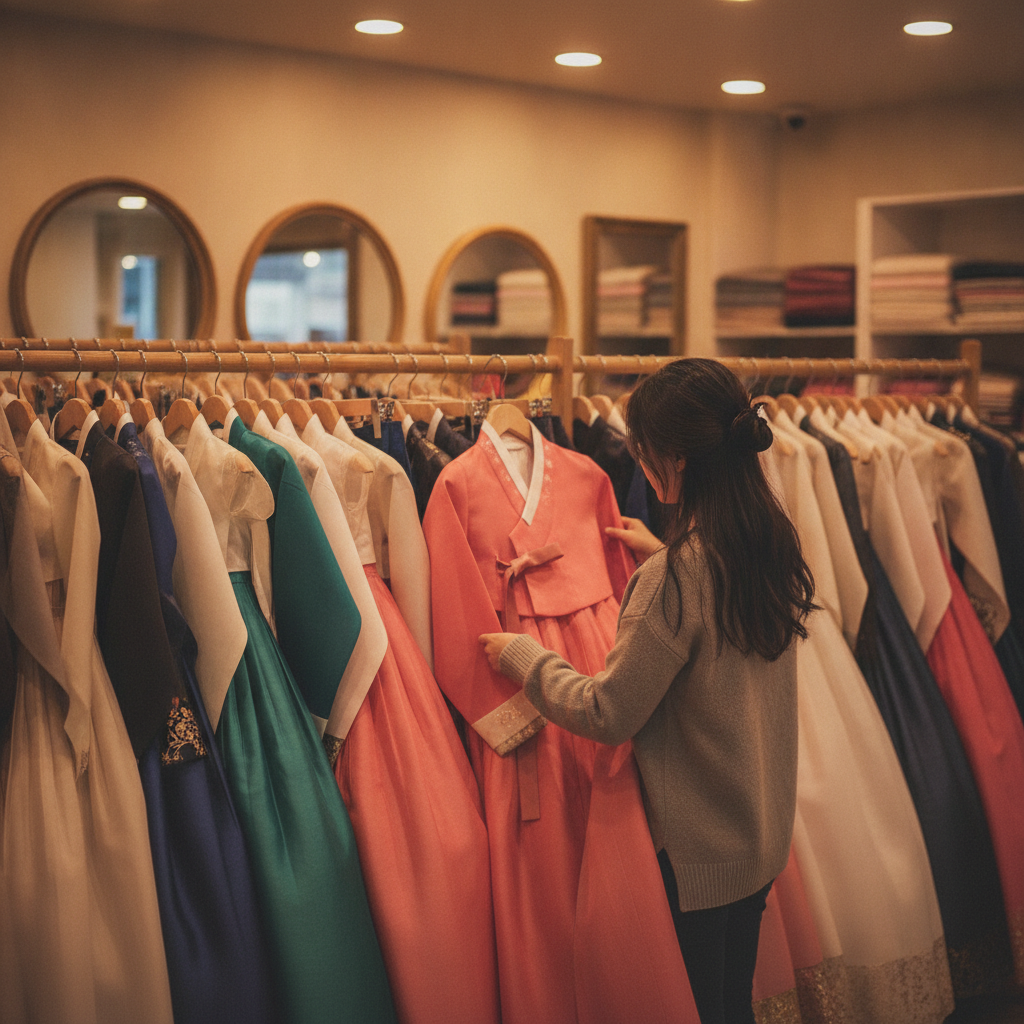
Where to go: two neighborhoods, two different days
Most hanbok rental shops in the city sit in one of two clusters, and they give you completely different photos.
Around Gyeongbokgung Station. Shops are packed into the blocks near the station exits, a few minutes on foot from the palace gate. You change, you walk, you are inside. This is the efficient choice, and it is the right one if the palace itself is the point — the wide courtyards, the throne hall, the changing of the guard.
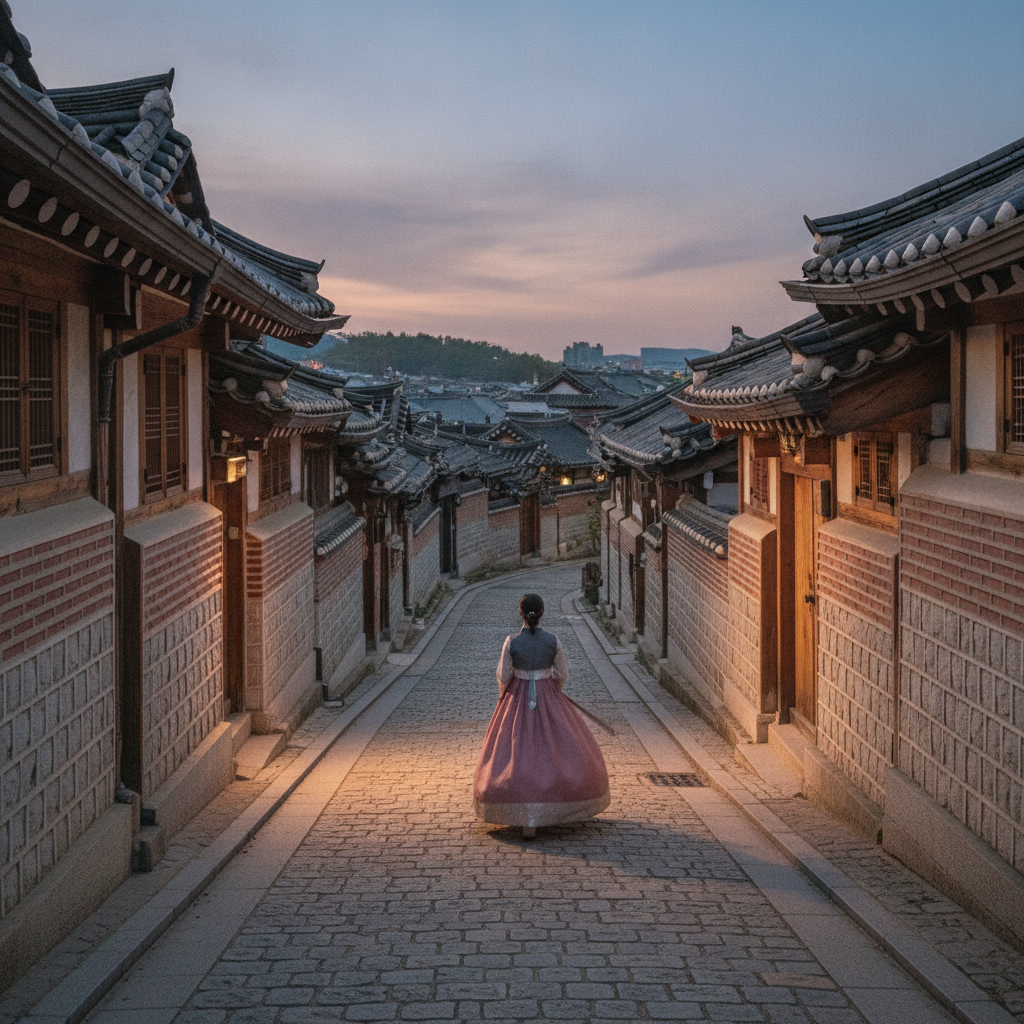
Bukchon and Anguk. Narrow lanes, tiled roofs, hanok walls at every turn, and far fewer wide-open crowds in the frame. Changdeokgung is a short walk away. Choose this side if what you actually want is the alley photo rather than the palace photo.
You can do both in one rental if you take the longer time slot. Walking between them takes roughly twenty minutes, and the walk itself is one of the better ones in central Seoul.
Plan around the closing days — this is where people lose an afternoon
This is the mistake I have watched happen more than once: friend books a hanbok rental on a Tuesday, walks to Gyeongbokgung, finds it closed, and burns two of their four hours figuring out a plan B.
The palaces do not all close on the same day.
| Site | Closed |
|---|---|
| Gyeongbokgung | Tuesdays |
| Changdeokgung | Mondays |
| Changgyeonggung | Mondays |
| Deoksugung | Mondays |
| Jongmyo Shrine | Tuesdays |
If the closing day falls on a public holiday, the site opens and closes the following weekday instead.
Two things worth knowing about hours, too. Gyeongbokgung runs 9:00 to 18:00 in spring and autumn, with last admission at 17:00, so a late-afternoon start is tighter than it looks. But Changgyeonggung and Deoksugung stay open until 21:00 year-round, last admission 20:00. That is the one most visitors never hear about — if your only free window is the evening, those two are where you go, and the lantern light on the walls is genuinely better than the daytime version.
Source: Korea Heritage Service, Royal Palaces and Tombs Center — Visiting Hours
How long to book
Two hours is enough for one palace, unhurried, if you have already decided which one. Four hours is the honest minimum if you want a palace plus the Bukchon lanes, or if you are the sort of person who stops for coffee. Most shops keep your clothes and bag in a locker while you are out, so you are not carrying anything.
One practical note: the shoes are usually the weak point. The sets come with slip-ons that are fine on flat stone and unpleasant on the hill up to Bukchon. If you are walking the lanes, ask whether you can keep your own shoes on — under a full-length skirt, nobody sees them anyway.
FAQ
Do I really get into the palaces for free?
Yes, as long as your outfit meets the definition — a wrapped-collar top with a skirt or traditional-cut pants. It applies at the four grand palaces, Jongmyo Shrine, and the Joseon royal tombs, and it applies to foreign visitors on the same terms as Koreans. You do not need to book anything in advance.
Is it strange for a foreigner to wear hanbok?
No, and I say that as the Korean friend people ask. Hanbok is not a sacred object here. Koreans wear it to weddings, to holidays, to their own family photos, and plenty of Koreans rent one at the palaces exactly like you would. The government made the free-entry policy specifically to get more people wearing it. Wearing it respectfully is the opposite of appropriation — it is the thing the policy is asking for.
Can men rent hanbok too?
Yes, and every shop near the palaces carries men's sets. The rule works the same way: a wrapped-collar top with the traditional-cut pants. The frequent mistake is renting only the top layer and keeping your own jeans, which is exactly the combination that fails at the gate.
Which palace should I wear it to?
Gyeongbokgung if you want scale and the guard ceremony. Changdeokgung if you want the garden and a calmer crowd. Deoksugung if you are going in the evening, since it stays open until 21:00. If you are undecided, the ₩6,000 combined ticket covers four palaces plus Jongmyo for six months — though with hanbok on, you will not need it that day.
What happens if I return the hanbok late?
Shops charge by the extra hour, typically at a rate similar to the base slot. It is rarely dramatic, but it is worth confirming when you pay, along with what happens if it rains. Set an alarm for thirty minutes before your slot ends — walking back from Bukchon takes longer than you think.
One more thing before you book
You do not need to make a whole day of it. Book a hanbok rental for two hours on the afternoon you were already going to visit a palace, and let it be a small thing rather than an event. That is how most Koreans do it.
And if you are building the rest of that day: Gyeongbokgung sits a short subway ride from Myeongdong, which is where I would send you for dinner afterwards. If you have not sorted out your transit card yet, start here, and if the subway map still looks like a circuit diagram, this one takes five minutes. For the evening after all that walking, the bathhouse rules are worth reading first.
Sources
-
Korea Heritage Service, Royal Palaces and Tombs Center — Admission Fees: https://royal.khs.go.kr/ROYAL/contents/R703000000.do
-
Korea Heritage Service, Royal Palaces and Tombs Center — Hanbok Free Admission Guideline: https://royal.khs.go.kr/ROYAL/contents/R705000000.do
-
Korea Heritage Service, Royal Palaces and Tombs Center — Visiting Hours: https://royal.khs.go.kr/ROYAL/contents/R702000000.do
Rental price ranges are market observations as of 2026 and vary by shop; they are not set by any authority.